
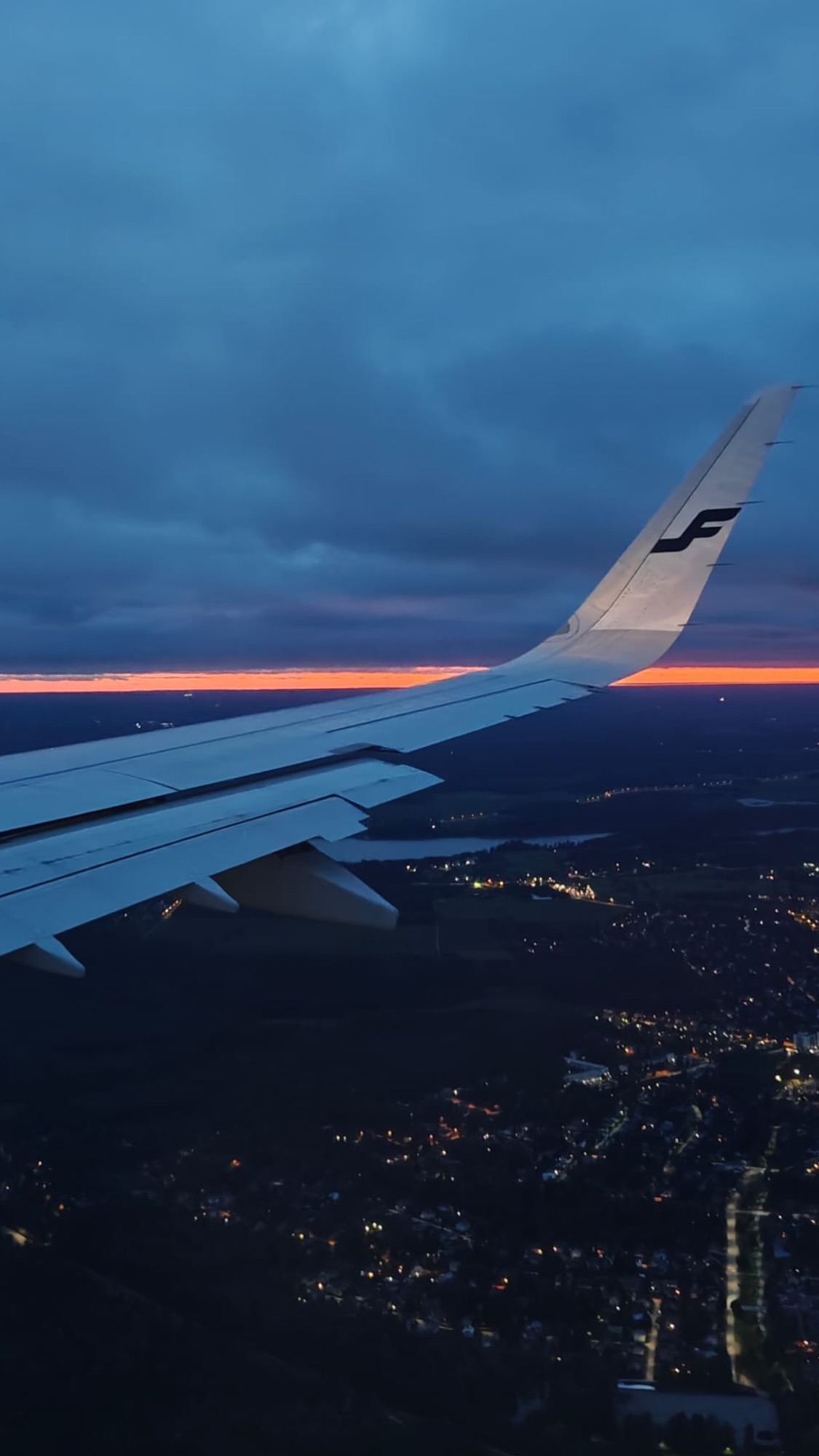
My personal take on Finnish culture – seen through the lens of user experience.
Updated October 2026.
There are things I love about Finland and things that quietly drive me insane.
Some days, I feel completely at home here. Other days, I feel like the loudest person in a very quiet room.
But instead of trying to make sense of that contradiction, I’ve learned to write through it. I wanted to write about how this country feels – not through politics or tourism clichés, but through the quiet logic behind how we live: all the invisible design choices that shape everyday life without ever being discussed.
Finland’s entire user experience runs on one core principle: emotional bandwidth.
Or at least that’s how I see it. So I did what any UX-minded person would do: I reviewed my own country like a product. Twelve parts of everyday life. Each one gets a verdict. Feature or bug.
Listen to this story
Short on time? Here is a 4 minute summary in English.
AI narrated. Read at a slightly slower pace, so it’s easier to follow if English isn’t your first language.
🧭 In this post
A slightly glitchy Finn
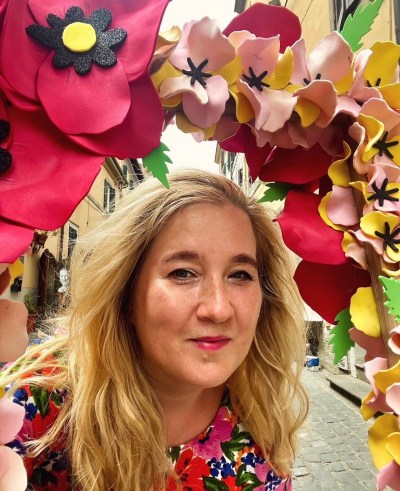
Quick context on your reviewer. I talk with my hands. I wear loud colours, prints and makeup that would make a Lutheran grandma clutch her hymn book. Beige and I are not on speaking terms.
I love speaking English, and for about six years it has been my main working language. It also suits the way I write. When I translate my own English text into Finnish, the words stay the same but the mood changes: what was light and playful in English turns heavy, almost melodramatic, in Finnish. Every language carries tone in its own way, and English lets mine stay light. So that’s what you’ll get here.
Loud on the outside, careful with the details.
I get energy from light, colour and curious people who are ready to get into a real conversation. Give me a good debate, good banter and good ice hockey.
People sometimes ask if I’m really Finnish.
I am. I just don’t always fit the quietest version of Finnishness.
Full disclosure: I’m not a UX designer. I don’t wireframe apps, and I don’t build user interfaces for a living. But as a generalist who looks at culture sideways, I’ve realised you don’t need a degree in design to see that Finland runs on a very specific type of architecture.
And being a bit of a misfit helps. You notice the things everyone else takes for granted. I’m not reviewing Finland from the outside. I live here, and I keep bumping into its edges.
The review: 12 features and bugs
🔍 How the review works
- ✅ Feature – works as designed and protects your energy
- 🐞 Bug – drains it (or at least drains mine)
Twelve parts of everyday life. The verdict comes at the end of each one – no scrolling ahead.
1. Silence in public
If you arrive in Finland expecting noise, chatter, or warmth-on-arrival, you might be disappointed. Our public transport is quiet. Our elevators are silent. Our waiting rooms are peaceful.
That silence isn’t accidental. It’s a quiet, shared respect for everyone’s personal space. It tells you: you’re trusted to figure things out. Where to sit. When to get off. How to pay. No one interrupts your thoughts. No one forces energy on you. And in a noisy world, that’s a gift.
That’s what I mean by emotional bandwidth: an invisible structure that protects your energy. You don’t spend it filtering chatter or fake friendliness. You keep it for yourself.
Verdict: ✅ Feature
2. The queue
If you want to understand Finland, watch a queue. No signage, no shouting, no staff managing it. But it works. No cutting, no sighing, no small talk. Just quiet, precise human choreography.
It’s not about strict rules. It’s about keeping emotional effort to a minimum. Most people take only what they need: space, time, attention.
Verdict: ✅ Feature
3. Quiet trust
I value the structure of everyday life in Finland: systems tend to be predictable, and people usually trust one another to get on with things. There’s something deeply comforting in knowing that if you forget your wallet in a café, someone will (most likely) return it without expecting thanks. That kind of psychological safety is rare and precious.
Verdict: ✅ Feature
4. Long silences between people
Silence on a tram is one thing. Silence across the table is another.
Some Finns are comfortable letting a conversation pause. I can appreciate the ease of not having to fill every moment. But when the silence goes on, I start wondering whether it means something. Maybe that’s my own wiring; either way, it doesn’t always feel restful to me.
Verdict: 🐞 Bug
5. Compliments (used to) make us panic
For a long time, complimenting a Finn on their jacket was a good way to watch the panic set in. “This old thing? It was on sale. At a flea market. Ten years ago.” A compliment wasn’t received – it was deflected, downplayed and returned to sender as fast as possible. Accepting praise felt too close to bragging.
But we’ve come a long way. These days, more and more of us manage a simple “thank you” – sometimes even without mentioning the discount. The old reflex still pops up now and then, but it’s fading, and I’m happy to see it go.
Verdict: 🐞 Bug – mostly patched
6. The missing emotional vocabulary
In my experience, we treat words like a limited resource. You don’t spend them unless you really mean it – which is why a Finnish compliment, when it finally arrives, hits like a lottery win.
The downside? Some of the most important phrases too often go unsaid:
- I’m sorry
- Thank you for helping me
- I value you
- I made a mistake
- You matter to me
Silence may feel neutral to the person keeping it. To the person waiting for a word, it can leave too much room for doubt.
Verdict: 🐞 Bug
7. Envy of success
In my experience, Finland has a quiet way of levelling people. Rise too visibly – work hard, earn well, dare to say you’re proud of yourself – and you’ll often notice. Not with drama. With side-eyes.
We even have a proverb for it: “Ken kuuseen kurkottaa, se katajaan kapsahtaa.” Roughly: whoever reaches for the spruce will tumble into the juniper. In other words – aim too high, and you’ll land in the prickly bushes.
Even our word for entrepreneur says a lot. Yrittäjä literally means “someone who tries.” Not someone who succeeds. Just a tryer.
I get where it comes from: a deep belief that nobody should think they’re better than anyone else. But me? I love ambition. I love when people do what they love and get paid really well for it. I find it inspiring, not threatening.
Maybe I get that from my late father. A hardworking, hilarious, bohemian engineer who never sugarcoated anything and made every room a little louder.
Verdict: 🐞 Bug
8. Nagging and self-doubt
So many of us have a habit of self-doubt – the quiet comparison game where we’re never quite good enough, even when the rest of the world keeps telling us we are.
And then there’s our favourite sport: nagging. Everything’s wrong. Everything’s too much, or not enough.
Verdict: 🐞 Bug
9. The weather
I don’t like the weather. Or the melancholy that comes bundled with it, free of charge.
I don’t complain when it’s 25°C and everyone’s melting – sorry, but that’s not heat. I do complain when it snows. Unless I’m in Lapland with fairy lights and hot cocoa, miss me with the snowdrifts.
Verdict: 🐞 Bug
10. Nature
I love Finnish nature – not just the Instagram version, but the real thing: the cold lakes, the clean air, the quiet. And the collective understanding that no one owns the forest, but everyone belongs in it.
Verdict: ✅ Feature


11. Dry humour
And to be clear – I do love Finnish humour. That dry, deadpan, straight-faced absurdity? I’m obsessed with it. Give me a one-liner so dry it evaporates mid-air, and I’ll laugh for a week.
We’re also very good at laughing at ourselves, starting with our English. Rally mode means a flat tone, short answers and zero facial expression. Somewhere between an old-school flying Finn on autopilot and a rally driver halfway through a sponsorship deal.
🏁 Wait – what is “rally English”?
Rallienglanti is our nickname for the very Finnish way of speaking English – Finnish pronunciation, Finnish rhythm, no attempt to hide it. It’s named after our rally and Formula 1 drivers and their famously deadpan interviews.
We love it, and we laugh at it all the time. But there’s an unwritten rule: the joke is ours. English isn’t our native language, and we speak it anyway. Laugh with us – never at us.
For the full picture, watch the interview below. It’s packed with rally English gold, including one legendary line I won’t spoil here. It lives rent free in my head.

Verdict: ✅ Feature
12. Quiet pride
I feel Finnishness most in the things I have a personal attachment to: the language, the landscape and the stories passed down through generations. Even the Kalevala, which many of us rolled our eyes at in school, has a way of turning up in the background of our shared culture. Summer cottages, old family names and familiar places give identity a physical shape.
A country can hold on to its sense of place while still changing. For me, that connection to where we started is one part of being Finnish.
📖 Wait – what’s the Kalevala?
The Kalevala is Finland’s national epic, compiled by Elias Lönnrot from old folk poems in the 1830s and 1840s. Its heroes fight with songs instead of swords – and back when Finland was part of the Russian Empire, it helped a small nation believe it had a culture of its own, on the long road to independence in 1917.
It also inspired Jean Sibelius – yes, the man behind the monument below – and J.R.R. Tolkien, whose Elvish language Quenya was shaped by Finnish (more on Finnish influences on Tolkien).
Verdict: ✅ Feature


One more thing…
Six features. Six bugs. A draw. Of course it is – my relationship with Finland is complicated. So it comes down to one tiebreaker.
I love sauna.
A sauna doesn’t say a word but somehow gets you. No one asks private questions, no one pushes you to open up. If you don’t want to talk – if you just want to be – you’ll most likely be left alone. And that, in its own quiet way, is a kind of care too.
Verdict: ✅ Feature
Final scoreboard: Features 7 – 6 Bugs
| # | Part of everyday life | Verdict |
|---|---|---|
| 1 | Silence in public | ✅ Feature |
| 2 | The queue | ✅ Feature |
| 3 | Quiet trust | ✅ Feature |
| 4 | Long silences between people | 🐞 Bug |
| 5 | Compliments (used to) make us panic | 🐞 Bug – mostly patched |
| 6 | The missing emotional vocabulary | 🐞 Bug |
| 7 | Envy of success | 🐞 Bug |
| 8 | Nagging and self-doubt | 🐞 Bug |
| 9 | The weather | 🐞 Bug |
| 10 | Nature | ✅ Feature |
| 11 | Dry humour | ✅ Feature |
| 12 | Quiet pride | ✅ Feature |
| TB | Sauna | ✅ Feature |
| Total | ✅ 7 – 6 🐞 |
Finland passes the review. Barely – and only thanks to the sauna. 🇫🇮
Where it comes from: war, silence and sisu
Finland is a small country that has spent much of its history between bigger powers. The Winter War and the Continuation War shaped more than borders. I think they also shaped how many of us still behave: endure, downplay, keep your pride clean and your emotions private.
Preparing for the worst has long been part of our culture. Finland has around 50,500 civil defence shelters, with space for about 4.8 million people in a country of 5.6 million. Many double as car parks, gyms or even swimming halls. Prepared for the worst, playing floorball in the meantime.
And then there’s sisu. The word every guidebook likes and no translation quite gets right. Grit, guts, stubborn endurance: the ability to keep going long after it would be reasonable to stop.
To me, sisu is part of what helped a small country get through the winters, the wars and the hard years in between. Without making a fuss about it, obviously.
You see it everywhere once you know where to look. The person cycling to work at −20°C like it’s nothing. The friend who shows up to help you move without being asked twice.
I recognise that instinct in myself. It can carry you through hard things, but it can also make it easy to mistake coping for being fine.
That’s the downside of sisu: if keeping going is the reflex, asking for help can feel like failure. Endure. Don’t make a fuss. Carry it alone.
Sisu gets you through the storm. It just never taught us how to say the storm was hard.
So I’m not against sisu. I just wish for a version where enduring something and talking about it can happen at the same time.
When I need a break from Finland
When I spend time elsewhere, I feel how much contrast does for me. The colours come back. I laugh more freely, notice more, and feel my attention widen. Then I come home to familiar streets and routines, and to a language that holds my thoughts without effort.
I need both experiences: the widening that comes from being elsewhere and the ease of finding my way back. Finland is much as I left it; I am the one who has shifted. Distance lets me see more clearly what I value here, and what I need space from. Home holds both feelings at once: affection and irritation, recognition and restlessness. I can leave, miss it, question it, and still know the way back.
Closing remarks
To me, a lot of what looks cold here is really respect for your space. And the bugs? They’re real – but I point them out because I love this place and want it to get better, not because I want to leave it.
Stop expecting warmth in the usual formats, and you’ll find it’s there – just built into things instead of said out loud.
That’s emotional bandwidth. At least the way I see it.
🇫🇮 Read next
Feature or bug? Tell me which part of Finland you’d file a bug report for in the comments below!
Leave a Reply