Once upon a time, class came with certain expectations. You could hear someone’s class in their accent. It was visible, predictable, and inherited. You used to know who was who. The rich had mahogany furniture, the middle class had matching curtains, and the working class had plastic covers to protect both. You could tell a person’s background from their wallpaper, their weekend habits, or even their choice of radio station.
The idea that your school or accent could define your worth still feels strange to me.
I am Finnish, which means I did not grow up thinking much about social class. Finland has its own divides, of course, but they are quieter and harder to see. Here, people rarely show off wealth or heritage. They build good houses, buy reliable cars, and make sure everyone gets coffee. It is not a classless society, but it is a country that pretends well. In Finland, most people attend the same public schools, so I never really understood what “private versus public education” even means. The idea that your school or accent could define your worth still feels strange to me. That is probably why I have always been fascinated by places where class still breathes loudly, such as the United Kingdom or the United States. In those countries, accents, hobbies, and even grocery stores reveal who you are. “Old money” is not just about money, and “middle class” somehow includes both doctors and debt.
I often think about how strange this is from a Finnish point of view. Here, people try to appear ordinary on purpose. You cannot tell who is rich by their clothes or by their tone. Yet even in that simplicity, taste quietly separates people. Some houses glow with design lamps, others with warm light from supermarket bulbs. Everyone says we are equal, but the difference is still there, hidden in texture, mood, and confidence.
This is my interpretation of all that, not as an insider, but as someone watching the quiet theatre of class from a distance.
The traditional model of social classes; upper, middle and working, has become too simple to describe the modern world. Class no longer lives in paychecks; it lives in presentation. You can earn little and still look expensive, or earn plenty and seem out of place. Taste has become the great translator, the skill that lets people cross borders without changing their address.
The Upper Class
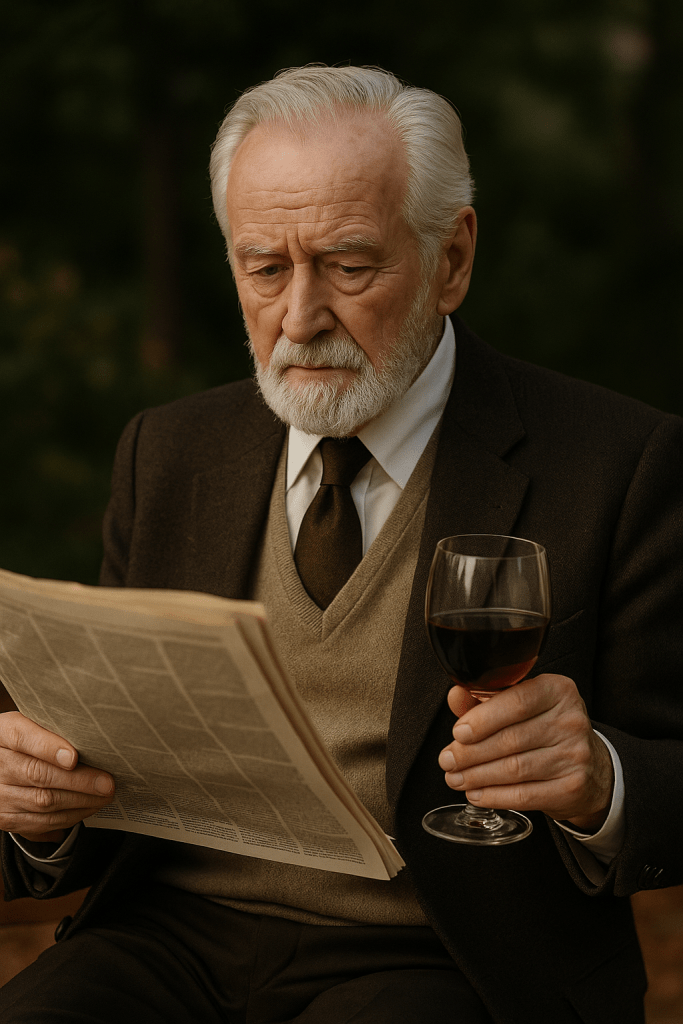
Then: Their accent did the talking
They had heritage instead of ambition. Money that did not move, houses that outlived their owners. Their world ran on understatement, with muted colors, inherited art, and a deep fear of being mistaken for someone trying too hard. Think of Gosford Park or early Downton Abbey, refinement without warmth, charm without need.
Now: They still exist, but they prefer beige.
The new elite choose quiet luxury, neutral cashmere, simple kitchens, and soft lighting. They ski in Switzerland but call it a family tradition. You can see them in Succession or Saltburn, still powerful, still detached, still allergic to enthusiasm.
Difference: Then, wealth was something you displayed through legacy. Now, it is something you disguise through restraint.
The Middle Class

Then: They lived by the rulebook.
Polite, moderate, and stable. Taste meant correctness, tidy homes, matching furniture, and clothes that did not start conversations. They worked hard to maintain balance, not to break boundaries.
Now: They value the illusion of effortlessness.
They shop smart, imitate Nordic simplicity, and curate Instagram that look expensive but come from IKEA. They book Airbnbs that promise authentic local vibes. They listen to podcasts about minimalism and call it mindfulness.
Difference: Then, the middle class valued order. Now, they value the illusion of effortlessness.
The Working Class

Then: They built the world everyone else decorated.
They worked with their hands, fixed what broke, and valued effort over elegance. Homes were practical, not polished, full of small routines that held life together. There was pride in owning something because it had been earned, not because it matched.
Their strength came from community. Neighbours helped each other. Weekends meant rest if you were lucky. Everything, from clothes to furniture and food, was made to last. There was no pretending, no curating, only getting on with things.
Now: They prefer to act instead of talk.
The working class is still everywhere, but often invisible in modern culture. They keep cities running, yet their lives do not fit neatly into the aesthetics of social media. Their values have not changed, honesty, resilience, and humour, but their visibility has. They are the ones doing real work while the rest of the world documents hustle as content.
Difference: They do not talk about purpose or balance. They simply keep everything working, quietly, constantly, and without applause.
Closing Remarks
Each class has learned to imitate the others. The upper class hides, the middle class performs, and the working class endures. It is not equality. It is choreography.
Wealth is no longer about who owns what or which designer label they wear. It is about the ability to be independent, to move freely, and to afford things that are not physical. Time, calm, distance, and choice. The privilege now is to live life on your own terms and to have space to think.
Maybe money stopped defining who we are, but something else replaced it. We used to count wealth in numbers; now we measure it in taste, time, and tone. The currencies changed, but the hierarchy stayed. We no longer ask who can afford the best life, but who can live it most beautifully. And maybe that says everything about us, that when the world promised equality, we reinvented status instead.
The privilege now is to live life on your own terms and to have space to think.
The next century will not be about who owns the most, but about who appears the most effortless. Wealth is becoming invisible. Power is disguised as simplicity. And taste, the one thing that cannot be measured, has become the new currency of belonging.
Maybe that is where the world is heading. Not toward equality, but toward subtlety. The surface will keep flattening, but the gap will stay, expressed in smaller and smaller details. The table may look the same, but not everyone can afford to sit without fear of being noticed.
This blog image shows how ChatGPT interprets class in people: an old rich man, a middle-aged nurse, and a working-class handyman. It is fascinating and a little unsettling to see how instantly recognisable these visual hints are. Wealth becomes posture, work becomes fabric, and respectability becomes expression.
That is exactly what this article has been about. Class is no longer a system we talk about; it is a language we read without realising it. Even artificial intelligence has learned the code; the same silent choreography of who looks powerful, who looks stable, and who looks tired.

 Jackinna of all Trades