For years, many Finns have seen Sweden as looking down on us -like “hillbilly alcoholic cousins”: hardworking, but rough around the edges, fond of vodka and saunas, and living in the cold, remote corners of Northern Europe. Swedes have often viewed Finns as people who needed help, but not quite serious cultural contenders. We were the underdogs—always a step behind, never expected to pull off anything big. And when it came to weird or funny? Well, the Finns had that mastered.
But the times are changing. However a recent incident at Melodifestivalen 2025 revealed just how deeply ingrained this perception still is. Swedish artist John Lundvik reacted to the surprise victory of Finnish trio KAJ with their sauna-themed anthem “Bara bada bastu” by saying, “I’ll give them this victory, but this is not the league I play in myself.” Lundvik criticized the competition’s growing trend, calling it “tailored for TikTok” and suggesting that Melodifestivalen had strayed too far from “traditional musical artistry.” But let’s break that down—what exactly does “traditional” mean here? Is it sending Loreen to Eurovision for a second win? Or was the plan always to have Måns Zelmerlöw back on stage to secure another victory? Because if that’s Sweden’s version of “musical integrity,” they’re playing moves like they’re in a spy thriller, while the rest of us are still figuring out how to play Monopoly. Sorry for the metaphor, couldn’t help myself.
I’ll give them this victory, but this is not the league I play in myself.
John Lundvik, Mello contestant
So how did we end up with a sauna song stealing the spotlight in 2025? KAJ’s “Bara bada bastu” is the complete opposite of Sweden’s usual polished Eurovision strategy. It’s not a world peace anthem or a dramatic wind machine moment—it’s a meme-ready banger with a countdown to the sauna, complete with lyrics designed for TikTok challenges. And maybe that’s exactly why it won. In a contest that’s seen everything from epic key changes to vampire cosplay, a song about sweating it out in a sauna feels refreshingly fun.
Let’s face it: in a world that feels increasingly dark and complicated, maybe what we need most is something lighthearted. “Bara bada bastu” doesn’t pretend to change the world or bring deep messages—it’s just about throwing water on hot rocks, sweating out stress, and singing your heart out. Simple, catchy, and totally ridiculous. Exactly what we need to forget about everything else for three minutes.
What I Love About Sweden and Finland: A Tale of Two countries with cultural differences
Let’s get one thing straight: Sweden and Finland might be neighbors, but they’re about as similar as a cinnamon bun and a shot of vodka. One gives you warm, cozy vibes and friendly chit-chat; the other hits you with a jolt of honesty so strong, it might just leave you speechless.
And honestly? That’s what makes them both so amazing.
Swedes can make literally anything look cool—even a trip to the grocery store turns into a design masterclass. A pack of potatoes in a minimalist basket? Suddenly, it’s art. You can spot a Swede in line for coffee, and somehow they look like they’ve just stepped out of a Scandinavian fashion magazine. It’s like they’ve figured out how to make even the most mundane moments look chic. Meanwhile, Finns? They couldn’t care less about looking cool—they’re all about getting stuff done. They’re practical, no-nonsense, and fashion? Well, if it’s functional, it’s good enough. No time for Instagram-worthy moments—just a quick coffee, a task to handle, and back to business. Finnish style isn’t polished; it’s unapologetically real—and there’s something beautifully honest about that.
Now, I’ve always appreciated good manners and politeness, but recently, I’ve come to realize just how much I value the Swedish way. Swedes know how to engage with others in such a calm, polite, and respectful way that it’s almost like they’re welcoming you into their space without saying a word. It’s not overdone, it’s natural, and it makes you feel instantly at ease. Finns, on the other hand? They’ll skip the pleasantries and get straight to the point—no small talk, just a quiet moment of understanding. It’s not that they don’t care, it’s just that they prefer to communicate in a more direct, meaningful way.
Both approaches are equally meaningful—whether it’s a warm, welcoming chat over coffee in Sweden or a silent but powerful exchange in Finland. It’s just a matter of how each culture chooses to show care—through light conversation or through quiet authenticity. And honestly? I love them both for it.
KAJ’s Unexpected Win: More Than Just an Underdog Triumph
KAJ’s victory wasn’t just an underdog triumph—it was a breakthrough moment for Finnish culture. “Bara bada bastu” became a symbol of how Finnish identity is evolving: with humor, pride, and confidence. In a world where Finland has often been sidelined, KAJ’s win was a celebration of the country’s creativity and resilience. It shattered the long-standing perception of Finland as the “rough” neighbor, proving that Finland’s voice is just as valuable, funny, and worthy of celebration as any other.
One of the most interesting layers of KAJ’s success is the role that language plays in their music. Finland is a bilingual country, with Finnish and Swedish as its two official languages. Swedish is widely spoken in many parts of Finland, but Finnish, a language completely different from Swedish and most other European languages, remains the mother tongue of the vast majority of Finns. Historically, the Swedish-speaking Finns have been seen as the cultural elite, while Finnish-speaking Finns have often felt marginalized.
This makes KAJ’s decision to perform in Finnish all the more significant. “Bara bada bastu” wasn’t just a fun song—it was a cultural statement. By singing in Finnish, KAJ was not only embracing their native language but also asserting Finland’s cultural identity in a space where Swedish has long been dominant. The song’s success was a step toward elevating Finnish language and culture on the international stage, without needing to rely on the dominance of Swedish.
If Sweden wants to ditch its usual “perfectly curated music masterpiece” and inject some humor into Eurovision, it’s no surprise they’re looking to Finland for inspiration. Let’s be real: Sweden has built its reputation on polished pop that’s been crafted to perfection. Everything is minimalist, sleek, and professional. But when it comes to funny? Well, that’s where Finland steps in.
Sweden has mastered musical perfection, but sometimes it’s time to let loose. And who better to help with that than Finland, whose raw, unapologetic humor is ready to make its mark on the Eurovision stage? It’s the perfect pairing—Sweden’s precision and Finland’s unfiltered humor are exactly what Eurovision needs to stay fresh, entertaining, and unforgettable.
Let’s be real: Sweden has built its reputation on polished pop that’s been crafted to perfection. Everything is minimalist, sleek, and professional. But when it comes to funny? Well, that’s where Finland steps in.
Hiphop Isn’t Restricted to Nationality or Language—For Once, Finland and Sweden Are Collaborating Together
When Stockholm Helsinki first came out, people were still making mixtapes, Nokia was the king of phones, and crossing the Baltic meant packing your Walkman and hoping for smooth seas. Fast forward to today, and if someone who was 25 when the song was released is now in their 50s, that means it’s been cruising through playlists for over 25 years. More than just a song, Stockholm Helsinki is a cultural journey—endless ferry rides between two cities with more in common than one could realize.
For Sweden and Finland, this collaboration is about embracing shared history, mutual respect, and sometimes, playful rivalry. Stockholm Helsinki is more than a song—it’s a symbol of how these two nations, despite their differences, can create something timeless together. As hip-hop continues to break boundaries, this partnership is a perfect reminder that culture and music don’t need to be restricted by nationality or language.
Meme-ready summer banger, whether you like it or not
KAJ’s Melodifestivalen victory wasn’t just surprising—it was shocking. No one saw it coming. The competition was packed with the usual suspects: big-name Swedish artists, including the AMAZING Queen of Swedish rock, the one and only Maja Ivarsson from The Sounds, and, well, Måns Zelmerlöw. The intention was clear – slick, radio-friendly pop songs with Eurovision potential written all over them. The atmosphere was tense, as always, with fans eagerly awaiting the usual mix of polished performances, dramatic key changes, and heartfelt ballads.
But then came KAJ, confidently strutting onto the stage with a song that was… well, a song about saunas.
“Bara bada bastu” – which translates to “Just Take a Sauna”—wasn’t the kind of track you’d expect to storm the stage at Melodifestivalen. There were no sweeping orchestral arrangements or emotionally charged lyrics about world peace. Instead, it was a bouncy, meme-ready banger, complete with a catchy countdown (“One, Two, Three, Sauna!”) and lyrics that were pure TikTok gold. If anything, it felt like KAJ was more interested in making the audience laugh than in taking themselves too seriously. And that might have been exactly what made it so irresistible.
As soon as the track hit the stage, it was clear: this wasn’t your usual Eurovision contender. The whole performance was absurd in the best way—playful, fun, and packed with energy. KAJ embraced the spirit of the song, leaning into the ridiculousness of it all with enthusiastic, tongue-in-cheek flair. Sauna-themed props, a quirky yet engaging stage presence, and a beat that made you want to dance (or at least laugh) set the tone for what would soon be the most talked-about entry of the night.
But what really sealed the deal was how “Bara bada bastu” managed to break through the noise. Sweden, with its longstanding tradition of polished pop perfection, had been in the Eurovision spotlight for so long that it was starting to feel predictable. Meanwhile, Finland—often overlooked and stereotyped as the quirky underdog—brought something fresh, bold, and… well, ridiculous. And it resonated with both the audience and the judges. KAJ’s win felt like a victory for fun, for breaking out of the mold, and for the joy of not taking things too seriously.
Long before the nominees for Melodifestivalen 2025 were even announced, the buzz around Sweden’s potential Eurovision entry was already electric. The odds were in their favor, and most Eurovision experts believed Sweden was going to win—because, frankly, they usually do. Sweden has long been seen as a Eurovision powerhouse, consistently delivering slick, polished pop anthems that dominate the competition. Fans and critics alike were already predicting that Melodifestivalen would once again be a showcase of Sweden’s musical perfection, with a performance that would almost certainly earn them a spot at the top.
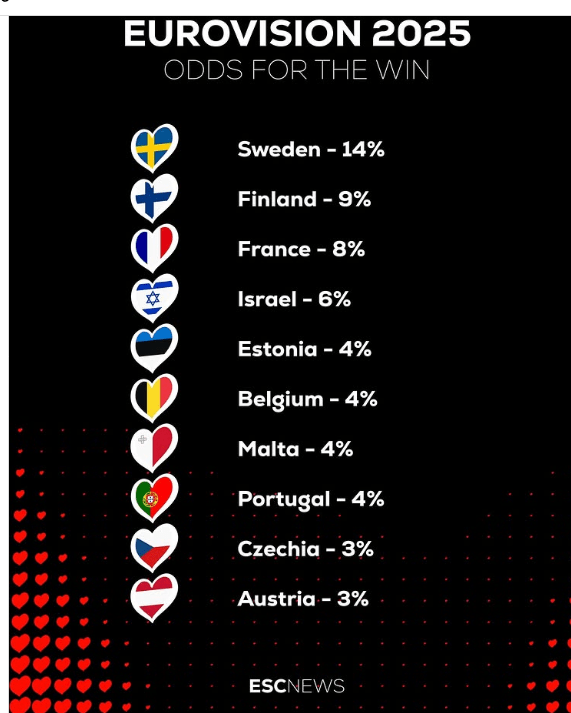
However, when you add in the Finnish layer, things get a little more complicated. Let’s face it—Eurovision has historically been more favorable to Sweden than Finland, which has often been the underdog. In a contest where larger-than-life performances are often the key to success, Finland hasn’t always been able to capture the same love from the public or the jury. With that in mind, there was always the possibility that even with Sweden’s usual Eurovision magic, Finland might just surprise everyone.
Market Square Meet-Up: Is It Sergels Torg or Helsinki’s Kauppatori?
Did you know that Finns have the torille tradition—“to the market square”—when something major happens? Or that we even have a face for this phenomenon: the Torille Guy? The term “Torille” translates to “to the market square,” and it’s where Finns go to celebrate victory, no matter how big or small. Whether it’s a major hockey win, a popular TV show finale, or simply a well-timed nap, Finns are ready to flood their market squares with joy, chanting “Torille!” like it’s their national sport.
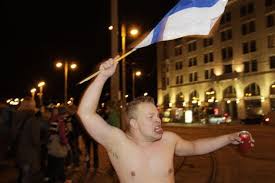
But this celebration, so deeply rooted in Finnish culture, is unique in its simplicity. While the Swedes might plan elegant gatherings in Stockholm’s Sergels Torg or sip lattes at sleek cafés, Finns go straight to the heart of things. We head directly to the market square—often in the middle of the city, surrounded by food stalls, trinket vendors, and a mix of older folks chatting over coffee, families strolling by, and the occasional random celebrant with a sisu attitude, raising a beer to the sky. We don’t need fancy speeches, just a collective cheer and maybe a country flag or two.
The Torille culture isn’t about exclusivity; it’s about community and no-frills celebration. You can’t help but love it. There’s something beautifully honest and carefree about the idea that a victory—even the most insignificant one—deserves a communal shout of joy in the town square. It’s grassroots at its finest—a place where Finns come together, embracing their unique blend of stoicism and joy, all in one place.
So when you hear, “Are we meeting at the market square—Sergels Torg or Helsinki?” don’t mistake it for a comment about the most Instagrammable spot in the city. It’s about whether you’re ready to embrace the true Finnish tradition of spontaneous community celebration. Whether you’re in the trendy heart of Stockholm or the cool, relaxed vibes of Helsinki, Finns know how to turn the market square into a spot of pure joy, where the only thing that matters is being part of the moment. Torille!
Closing Remarks
KAJ’s win at Melodifestivalen 2025 represents more than just a victory in a music competition. It signifies a shift in the way Finland is perceived on the international stage. No longer confined to the stereotype of being the “rough” neighbor, Finland is now taking center stage, showcasing its creativity, sense of humor, and unique identity. The victory highlights the strength of Finland’s minority cultures, its vibrant musical scene, and the importance of linguistic diversity in shaping its future. In the end, “Bara bada bastu” is more than just a sauna anthem. It’s a testament to Finland’s resilience, its rich cultural heritage, and its ability to move beyond old perceptions and stereotypes. Through KAJ’s success, Finland has sent a message loud and clear: it’s here, it’s proud, and it’s not afraid to laugh at itself while doing it. Whether you’re in Finland or Sweden, the song’s success is a reminder that cultural boundaries are meant to be broken—and sometimes, all it takes is a good laugh, a hot sauna, and a catchy beat.
One, Two, Three, Sauna

 Jackinna of all Trades