Some people see the Nordics as a utopia—a perfect place to live because of the high quality of life, strong social systems, and beautiful nature. They admire how Nordic countries prioritize education, healthcare, and equality, believing these factors contribute to a happy society. For them, the Nordics represent a harmonious balance between modern life, work, and caring for nature.
On the other hand, some view the Nordics as a dystopia, a warning of what not to become. They highlight high taxes, cold weather, isolation, and mental health issues. These contrasting views often stem from personal experiences, cultural backgrounds, and what people hear and see in the media.
This mix of opinions inspired me to write this blog post. The A-Ö list is a mix of words from Nordic countries, each offering a glance into our unique cultures, showcasing everything from Abba to Öky.
I asked AI to create a header image of Nordic people, hoping for a humorous representation of our distinct cultures. Although the AI didn’t quite capture the essence of the Nordics, I hope this text does a better job!
A
Abba
I don’t think there’s any better way to start this list than by going into a deep dive. This legendary Swedish pop group, Abba, formed in the 1970s, revolutionized the music scene with harmonious vocals and catchy melodies, as a vibrant era in pop culture as culture icons. Their songs continue to resonate, and they’ve seen a new level in popularity through musicals and films like “Mamma Mia!” a fair reason to make their comeback. This legacy started Sweden’s impact on global music continuing strongly after 70 years.
This year marked the 50th anniversary of ABBA’s Eurovision win in England. However, Eurovision fans were left outraged when ABBA didn’t reunite to celebrate, and fans found the use of AI holograms disappointing.
Apparently, even iconic anniversaries can’t bring ABBA back together.
Astrid Lindgren
A monumental figure in children’s literature, Astrid Lindgren‘s works, such as “Pippi Longstocking,” have been translated into numerous languages and have inspired generations to come. Her touch in the themes of storytelling include usually independence, adventure, and the value of childhood imagination.
Avicii
Tim Bergling, known as Avicii, reshaped the electronic music landscape with his innovative sound. His hits like “Wake Me Up”, “Brother”, “Levels” blended genres and brought electronic music to mainstream audiences.
I sometimes think of Avicii, and his story brings to mind the myth of Icarus, who flew too close to the sun. Avicii, born Tim Bergling, rose to fame at an astonishing pace, revolutionizing the electronic music scene. His career was both a blessing and a curse, as the pressures of fame on his mental health. Despite his extraordinary talent, the demands became overwhelming, and his tragic early death in 2018 reminds us of the fragile balance between creativity and personal well-being. Like Icarus, Avicii soared to great heights but ultimately paid a heavy price.
Despite his tragic death, Avicii’s legacy lives on, influencing countless artists and highlighting the importance of mental health of young people everywhere. I consider the biography written about him to be one of the best I’ve ever read, offering an intimate and heartfelt look into the life behind the fame.
Alvar Aalto
A Finnish pioneering architect and designer, Alvar Aalto is celebrated as a classic for his contributions to modernist architecture. His designs emphasize harmony with nature and human-centered spaces, reflecting many values that Finns have. His work, from public buildings to furniture design, showcases a unique blend of functionality and aesthetic beauty, making him a key figure in the Nordic design narrative.
One of the most important pieces of furniture I own is by Alvar Aalto, inherited from my late father. Although my dad has been gone for a very long time, his presence still feels close, embodied through the timeless design of Aalto’s work. This connection between the past and present is something I deeply cherish. Aalto’s designs, known for their simplicity and functionality, have become iconic, representing not only Finnish design but also a personal link to my family history.
Art
Nordic art scene have a wide range of styles and expressions, from traditional crafts to contemporary installations, often reflecting the local region’s history, nature, and social issues. Nordics art is usually characterized by a commitment to nature and humble background showcasing how artists navigate modern challenges while honouring their rich heritage.
- Edvard Munch (Norway) – Best known for The Scream, Munch’s expressionist style captured raw emotions like anxiety and existential crisis, having his profound touch influenced in modern art.
- Carl Larsson (Sweden) – A representative of the Arts and Crafts movement, the painter is mostly known for his water colouring style portraying the idyllic scenery of Swedish domestic life from nature to family life.
- Akseli Gallen-Kallela (Finland) began his career illustrating everyday life later going to more romantic themes, particularly focusing on Finland’s national epic poem, the Kalevala, and the landscapes and traditions of Karelia, deeply intertwined with Finnish national identity and mythology.
- Vilhelm Hammershøi (Denmark) – Known for his quiet, introspective interiors, his muted color palette and minimalist compositions represents a sense of calm and mystery.
- Thórarinn B. Þorláksson (Iceland) – One of Iceland’s first painters, Þorláksson is celebrated for his landscapes that capture the stark beauty of Icelandic nature.
B
Birch
The birch tree holds significant practical importance in the Nordics, as its wood is used for crafting furniture and for birch whisks (called either vihta or vasta based on where in Finland is the person from) is used at the Finnish saunas, quite usually if you go outside of the capital region. In folklore, birch trees symbolize renewal and resilience, reflecting the changing seasons and connecting the natural world being representing the harmonious relationship with nature that is central to Nordic traditions.
Bonfire
Lighting bonfires is a cherished tradition in Nordic celebrations, particularly during Midsummer. These fires symbolize community and festivity, serving as a focal point for gathering and celebrating the light of summer. The act of gathering around a bonfire fosters social bonds and communal spirit.
C
Camping
Whether you love it or hate it, camping is still quite a popular way to spend time in the Nordics, although not as it was before the age of Internet. The rules called as ” every man’s rights” or “jokamiehen oikeudet” in Finnish and “allemansrätten,” in Swedish allows people to explore the wilderness freely, pick up berries and mushrooms, fostering a strong connection to the natural environment.
Child Healthcare Clinic
Neuvola is a cornerstone of Finland’s public health system, providing prenatal and postnatal care, education, and support for families. This initiative started in 1922 shows Finland’s dedication to children’s health and well-being, emphasizing the importance of early childhood development and support for parents.
Coffee
Coffee culture in the Nordics is vibrant and unique, with Sweden “fika,” or coffee break, serves not just as a time for caffeine, but as a moment to connect with friends and family, to Finland most aspects in a day are marked by coffee. You may have heard of aamukahvi (morning coffee), päiväkahvi (day coffee), iltakahvi (evening coffee), or matkakahvi (traveling coffee). A good list of etiquette around coffee is found here.
Copenhagen
Denmark’s capital, is known for its rich history and modern design, intresting blend of old-world charm and contemporary design. With a rich cultural life, the city is hosting numerous festivals, art exhibitions, and concerts.
Cuisine
Nordic cuisine is defined by simplicity with a deep connection to nature. Traditional dishes with local ingredients such as fish, root vegetables, berries, and grains, are widely used. In recent years, the “New Nordic Cuisine” food scene has also highlighted more sophisticated and modern approaches while maintaining respect for these traditional and humble ingredients. Countries like Denmark and Sweden have seen at the center in global culinary recognition, with restaurants such as Denmark’s Noma pioneering this approach. Finnish food, though not widely known outside the country, is a hearty and simple cuisine that celebrates natural, local ingredients like fish, game, root vegetables, and wild berries, reflecting the country’s deep connection to its rugged landscape and seasons.
D
Dalahäst
The Dalahäst, or Dala horse, is a traditional symbol of Sweden, painted in vibrant colors. This handcrafted wooden horse represents Swedish folk art and is often given as a gift, embodying the spirit of Swedish craftsmanship and cultural heritage.
Design
Nordic design is known for its minimalism, functionality, and timelessness, focusing on simplicity and quality craftsmanship. From furniture to architecture, it reflects a balance between beauty and practicality. Iconic designers like Alvar Aalto (Finland), Arne Jacobsen (Denmark), and brands like Ikea (Sweden) and Marimekko (Finland) have had a profound influence on global design trends.
Denmark
Denmark, the southernmost Nordic country, is known for its rich history, modern design, and progressive society. The capital, Copenhagen, is a cultural and culinary hub, home to world-class architecture, design and gastronomy. Denmark is also the birthplace of Lego and hosts the renowned Tivoli Gardens, representing a mix of traditional and contemporary culture.
E
Education
Education in the Nordic countries is often considered as one of the best in the world. Finland’s approach, characterized by a focus on equity, creativity, and student well-being, has become some sort benchmark for many countries. This approach in the Nordics has consistently ranked those nations at the top of global education rankings.
F
Fazer
Fazer is a beloved Finnish brand known for its chocolates, pastries, and bakery products. Founded in 1891, the company has become a synonym for sweets in Finnish households, with products like the iconic Fazer’s Blue symbolizing comfort and nostalgia.
Fika
Sweden has a lovely concept called fika, which is a coffee break, highlighting the importance of taking time to enjoy food and company, showcasing the role of culinary traditions in social life. In English, fika means “to have coffee” or “a coffee break”, but it’s about so much more than that.
Nice company + dark roasted black coffee + cinnamon buns = fika.
– Jennie, Sweden Travel Consultant
Finnjävel
In the 1950s and 1960s, Swedes often called Finns who moved to find factory jobs as Finnjävels, which means “Finnish Devils.” This name pointed out the challenges Finnish immigrants faced when they crossed the Gulf of Bothnia to work in jobs that needed workers because of the tough times after the war in Finland and Sweden’s growing economy.
Today there is a fine-dining restaurant in Helsinki called Finnjävel, which celebrates traditional Finnish cuisine in a modern way. This change shows a significant cultural shift, turning a term that once had negative meaning into a point of pride. This shift reflects a growing appreciation and pride in Finnish identity, transforming a term that used to bring shame into a celebration of heritage. I find this perspective very inspiring and commend the brave restaurateurs behind it.
Finlandia
Alongside the Tuntematon Sotilas movie, the Finlandia Hymn captures the inner life of Finns. Both the film and the hymn reflect deep emotions, sisu, and a strong connection to Finnish identity and heritage, emphasizing themes of hope, struggle, and love for one’s homeland—never taking independence for granted. I can’t speak for everyone, but my gut feeling is that 90% of people consider this anthem to be the national anthem instead of the official Maamme anthem. I count myself among them. It’s the same strange situation as with pesäpallo—a local version of baseball—being Finland’s national sport instead of ice hockey, especially considering how much more popular ice hockey is. It’s quite a weird thing!
Short version without singing
Short version with singing
Finlayson
A Finnish textile company known for its commitment to quality and design. Established in the early 19th century, Finlayson represents Finland’s rich history of craftsmanship in textiles.
I’ll explain Tom of Finland later in this blog, but for now, I want to highlight an interesting connection with Finlayson. Finlayson has embraced Tom of Finland’s art in recent years, incorporating his bold and distinctive imagery into their products. Collaboration reflects a celebration of Finnish culture and pride of LGBTQ+ , bringing Tom of Finland’s influential work into everyday life.
Fjords
Norway’s fjords are natural wonders, with cliffs and deep blue waters, creating stunning landscapes. In Norway, fjords are not only scenic but also essential for transportation, fishing, and tourism, playing a key role in the Norway’s identity.
Folklore
Folklore is a phenomenon existing in all cultures. In the Nordics, folklore is understood as a category of cultural knowledge and practice, typically defined by three criteria that have often gone unspoken:
1. Development of Knowledge:
Folklore knowledge comes from social interaction, not from a single source. Technology can help with this interaction, but the differences in folklore come from how people learn and share it.
2. Meaningful Elements:
Folklore includes meaningful parts—words, stories, or actions, like breaking a mirror for bad luck—which makes it different from other types of knowledge, like folk music.
3. Social Influence:
Folklore is shaped by social imagination and ideas, including beliefs that go against modern science, like ghosts and germs. This sets it apart from structured systems like language.
Nordic folklore is deeply intertwined with mythology and a strong connection to nature. Stories of trolls, elves, and spirits dwell in the forests and lakes, reflecting the diverse landscapes and changing seasons—from spring to summer, autumn, and winter—in each region. Finland’s Kalevala, Sweden’s trolls, spirits and elves, Norway’s Gods and Goddesses, and Iceland’s hidden people (huldufólk) are just a few examples of the rich folklore that continues to influence modern literature, art, and culture across the nations.
Surprisingly, there aren’t many films based on these stories, despite the dark forests and other elements that would make for great adaptations. I hope that local filmmakers in the next generation will delve into this theme more deeply. It could be a simple yet effective way to tell stories that a few generations ago were genuinely believed in, and it shouldn’t resemble a Hollywood blockbuster horror movie at all. Imagine a film that combines the eerie atmosphere of The Blair Witch Project with the subtlety and folklore of The Witch—focusing on character-driven narratives and atmospheric storytelling rather than jump scares, which often underestimate the audience. This approach could highlight the cultural significance of these tales while maintaining a sense of authenticity.
Forest
Forests make up a large part of the Nordic landscape, especially in Finland (over 75% of Finland’s land area is covered with forest), which has one of the highest percentages of forested land in Europe. These forests are important to Nordic life, providing resources like timber and spaces for outdoor activities.
Free school meals
Offering free school meals to all students is a Finnish practice that started late1940s, followed by Sweden (1970), Norway (2001), Denmark (2008), and Iceland (2010). The origins of schooling and school meals go back about 200 years to a time when reading and studying were uncommon, even for adults in Finland. Some children had basic reading lessons during parish meetings and traveling schools. This initiative doesn’t only reflect the Nordic commitment to equality but also for well-being, ensuring that every child has access to nutritious food during the school day.
G
Ghost
Ghost is a Swedish rock band formed in 2006, known for their theatrical performances and unique blend of heavy metal with melodic elements. The band’s anonymous members, led by the character “Papa Emeritus.
I consider Ghost as one of my favorite Swedish bands. What sets Ghost apart is their dramatic approach and focus on great melodies. Unlike typical heavy metal, they combines powerful riffs with catchy, almost pop-like choruses. Their theatrical style adds a layer of storytelling and performance art, making their music feel engaging. This blend of dark themes and memorable melodies creates a unique experience that appeals to a broader audience, someone like me, even those who may not typically enjoy heavy rock genres.
Glogg
Glogg is a traditional Nordic mulled wine, typically enjoyed during the Christmas season. This warm and spicy drink, often made with red wine, cinnamon, cloves, and cardamom, is popular across Nordics.
H
Helsinki
Helsinki, Finland’s capital, is a vibrant city that blends modern design with historical architecture. A few months ago, I wrote “Views of Helsinki Through My Lens: A Photographic Tribute to Finland’s Capital,” noting that the chances of getting lost in Helsinki are unlikely, but like lightning striking the same place twice, they’re never zero.
HIFK
HIFK, which stands for Helsingfors Idrottsförening Kamraterna, is a multi-sport club based in Helsinki, best known for its ice hockey and football teams. With a rich history in Finnish sports, HIFK has won numerous championships and has a passionate fan base. It tends to divide opinions among Finns—people either love it or hate it. My fiancé is a devoted HIFK fan, and we frequently watch games in our living room and at Nordis Hall.
I have great respect for the strong fandom; I’ve experienced the atmosphere from the fan seats, where everyone sings team songs, shouts, and claps. There’s even a drummer in the audience! I’ve never seen anything like this in Finland’s sports scene, despite having watched a lot of sports in my life. The level of passion is incredible.
HIFK football fans singing team songs.
H&M
H&M (Hennes & Mauritz) is a Swedish multinational clothing retailer founded in 1947. Known for its affordable fashion, H&M has become one of the largest fashion retailers in the world.
Humour
Nordic humor is often characterized by its dryness and subtlety. Whether it’s Sweden’s ironic wit, Finland’s straight-faced absurdity, or Denmark’s playful banter, humor is an important part of being a Nordic.
I really enjoy Finnish humor, as well as Danish and British humor above all else. Sometimes, a good American roast can be fun, and I appreciate several American films, such as stuff created by Sasha Baron Cohen. But overall, my favourites come from the Nordics and Britain, above all else, balancing a very thin line on what’s considered humorous and what’s inappropriate.
If you’ve seen the Danish Klovn (series or movies) and enjoyed them, I think we can be friends forever. As one episode describes “Mia’s Christmas party goes awry when brain-dead Bodil shows up and Casper kidnaps a child. Frank finds himself in an awkward situation after a bank robber recognises him.”
In May, I wrote about this in “Does My Bum Look Big in This? – A Quick Overview of the Art of Comedy.” so feel free to check it out for more.
Hygge
Hygge is a Danish word that means a cozy and warm feeling. It’s all about enjoying the simple things in life and creating a sense of comfort and happiness.
I
Ice hockey
Ice hockey is one of the most popular sports in the Nordics, especially in Finland and Sweden, where it has become a key part of national identity. Both countries have a rich history of success in international competitions, supported by passionate fan bases in local leagues.
The rivalry between Finland and Sweden in ice hockey is among the most intense and celebrated in the sport. The atmosphere during the games is electric, with fans bringing their A-game—chanting, waving flags, and cheering for their teams. Whether in packed arenas or watching from home, the excitement is in the air.
In 1995, when Finland won its first gold medal in hockey, there was no better way to achieve it than by defeating our lovely western neighbor. “Den Glider” was a song for the Swedish men’s national ice hockey team during the 1995 IIHF World Ice Hockey Championship, but it became highly popular in Finland when their team defeated Sweden in the tournament final.
Since then, the song has become a national favorite, often played whenever a home team scores, sometimes with a touch of irony.
This victory not only marked a historic moment for Finnish hockey but also gave rise to the popular celebration known as “Torille.” You’ll read more about this celebration later in my blog.
Another great hockey memory of the past decade was Mikael Granlund’s incredible air hook. Given the pressure he faced as a young and hungry player, it truly felt like a miracle on ice.
May 13, 2011. Orange Arena, Bratislava. Finland vs. Russia (another neighbour, this time with Eastern one) semi-final match in the men’s ice hockey World Championship. The game clock shows 25:10 when Mikael Granlund, 19, makes the miracle. Still one of the greatest moments in Finnish ice hockey history.
Side note: I volunteered at the IIHF Helsinki competition in 2022 and worked with the media team serving the international press. It was a dream come true for me, and I absolutely loved the experience!
Iceland
Iceland, often referred to as the “Land of Fire and Ice,” is a unique blend of breath taking landscapes, rich folklore, and vibrant culture, located in the North Atlantic.
Iittala
Iittala is a Finnish design company renowned for its high-quality glassware and home goods. Founded in 1881, it has become a symbol of Finnish design, blending functionality with elegant aesthetics.
Among everything the brand offers, the Taika (Magic) series is my favorite. This collection is inspired by the enchanting themes of nature and folklore, featuring vibrant colors and playful patterns, combining elements of fantasy with everyday functionality.
This year, Iittala underwent a rebranding that has sparked mixed reactions. While some see it as a modern evolution, many believe the brand has lost its essence. Personally, I find myself caught between these views; however, most feedback suggests that the rebranding of such a beloved and iconic brand has not been successful. I haven’t purchased anything from Iittala since, which speaks to my disappointment. While I understand the need to appeal to younger audiences, the disruptive nature of the rebranding felt excessive to me. Imagine if a brand as cherished as the BBC, Hershey’s, or Levi’s were to change in a way that upset its long-time fans.
I’m not alone in my feelings—an article in the Financial Times noted that many Finns are furious about the makeover of their favorite homeware brand.
Ikea
Founded in Sweden in 1943, Ikea has become a global leader in affordable, modern furniture. Known for its flat-pack designs and minimalist style, Ikea embodies the principles of Scandinavian design—simplicity, practicality, and affordability. Ikea stores around the world bring a piece of the Nordic lifestyle into millions of homes. I consider their meatballs among the best, and they’ve become a beloved highlight of the shopping experience.
Isänmaa
Isänmaa, meaning “fatherland” in Finnish, is embodies the deep emotional connection the country has with the homeland, its freedom and independence. This term reflects national pride and cultural identity, often seen in themes such as history, nature, and community, and it’s deeply integrated in Finnish literature, music, and art, symbolizing the enduring bond between the people and their land.
J
Jari Litmanen
Jari Litmanen is a legendary figure in Finnish football, often said as one of the greatest players in the Finnish sport history. Jari Litmanen had an illustrious career, playing for clubs such as MyPa, Ajax, Barcelona, and Liverpool. His time at Ajax was particularly noteworthy, where he achieved significant success, including winning the UEFA Champions League in 1995. Here is a good article written by the New York Times.
This quote explains Finnish work ethic quite well.
There are two alternatives. You can either go and make the best of everything or you can stop and feel sorry for yourself.
– Jari Litmanen
K
Kalevala
The Kalevala is a cornerstone of Finnish literature and national identity, created by Elias Lönnrot in the 19th century from ancient Finnish oral folklore and mythology. It has 50 stories of which is telling of legendary heroes, magical creatures, and the creation of the world.
Kalsarikännit
Finnish is very concrete and to-the-point language many ways. One example is Kalsarikännit, a “combination of kalsari (underwear) and kännit (drunkenness), kalsarikännit refers to those times when you can’t be bothered to go out so you just have a drink at home – in your underwear, because why dress up if you’re not going anywhere?
The feeling when you are going to get drunk home alone in your underwear – with no intention of going out.
Kalsarikännit, thisisFINLAND
Interestingly, Finland is the first country in the world to publish its own set of country-themed emojis, containing 56 tongue-in-cheek emotions, which were created to explain some hard-to-describe Finnish emotions, Finnish words, and customs.
If kalsarikännit were a Swedish idea, it could have been cleverly branded and packaged as a lifestyle trend, complete with curated starter kits. Imagine cozy bundles featuring soft loungewear, artisanal snacks, and a selection of craft beers or ciders, all designed for the perfect at-home relaxation experience. Lots of commercial potential. I could see leading brands like Marimekko or Finlayson to create something fun, engaging and colourful out of the concept.
L
Lake
Finland is known as the “Land of a Thousand Lakes,” but it actually has around 188,000 lakes. These lakes are found all over the country, and they come in many sizes, from small ponds to large bodies of water like Lake Saimaa, the biggest lake in Finland.
For my grandmother, however, lakes took on a different significance. She never learned to swim, which is unimaginable to understand these days. Her days were consumed with household chores et cetera, leaving little time for leisure. Her parents, perhaps hoping to keep her focused on her responsibilities, told her tales of lake monsters—stories meant to keep her from the “danger” of enjoying the carefree joys of childhood. The older I get, the more I realize what kind of life she lived.
Lapland
Lapland is a unique region that spans into Norway, Sweden, Finland and Russia, and is known for its stunning natural landscapes, forests, mountains, and the mesmerizing Northern Lights. In winter, Nordic Lapland transforms into a winter wonderland, attracting visitors for activities like skiing, snowmobiling, and dog sledding. The summer months on the other hand offer a different charm, with the midnight sun illuminating the landscape. The region is also famous for its unique wildlife, including reindeer, arctic foxes, and various bird species. Visitors can experience the rich traditions of the Sámi, including traditional music, crafts, and cuisine, making it a truly fascinating destination that showcases the beauty and culture of the North.
Lego
Lego, the iconic Danish toy brand is inspiring creativity and play among children and adults alike. The colourful building blocks have becoming a beloved staple in households worldwide.
Leevi and the Leavings
Leevi and the Leavings is a legendary Finnish band formed in the late 1970s, known for their poetic lyrics and catchy melodies exploring the themes of love, loss, and everyday life. Their music and impact on culture are hard for anyone outside of Finland to fully understand, as their lyrics and themes reflect a distinct Finnishness.
Leningrad Cowboys
The Leningrad Cowboys are a Finnish band known for their original style and distinguished take on rock music. They were ahead of their time in many ways, mixing rock music with unique visuals and humor. Their collaboration with the Red Army choir created an exciting blend of rock and traditional music.
Linnanjuhlat
Linnanjuhlat, or the Castle Ball, is an annual event held at the Presidential Palace in Helsinki to celebrate Finland’s Independence Day. It features a grand reception attended by celebrities and remarkable cultural figures and it’s shown on television making it a significant cultural occasion. The event is known for its glam fashion, speeches, and the tradition of guests greeting the President.
Lordi
Lordi is a Finnish heavy metal band that gained international fame after winning the Eurovision Song Contest in 2006 with their hit “Hard Rock Hallelujah.” Known for their elaborate monster costumes and theatrical performances, they brought a unique blend of horror and rock to the stage. Lordi’s victory marked a significant moment in Finnish music history, highlighting the country’s diverse musical landscape.
Lonkero
Lonkero, or “long drink,” is a popular Finnish beverage made by mixing gin with grapefruit soda or other fruity flavors. Originally created for the 1952 Helsinki Olympics, it has since become a beloved drink in Finland.
M
Marabou
Marabou is a beloved Swedish chocolate brand known for its creamy texture and rich flavors. Established in 1916, Marabou has become synonymous with Swedish chocolate culture currently owned by Mondelez International.
Marimekko
Marimekko is a Finnish design company famous for its bold patterns and vibrant colors. Founded in 1951, the brand has become a symbol of Finnish design and lifestyle, producing everything from textiles to clothing and home decor.
Maternity Package
Finland’s maternity package is a revolutionary initiative promoting health and welfare of an infant. Provided to new parents, this box contains essential items for newborn care.
Midnight sun
The Midnight Sun is a natural phenomenon experienced in the Nordic countries during the summer, where the sun remains visible at midnight. This unique occurrence creates long days filled with light, allowing for endless outdoor activities and celebrations, particularly bring celebrated in Lapland, attracting tourists who seek to experience its enchanting glow.
Midsummer
I think this video says pretty much everything you need to know the difference between Swedish and Finnish midsummer. Seriously though, no matter what you’re preference is, Midsummer is essential part of Nordic life, from festivities, traditions, to communal gatherings.
Mummola
“Mummola” refers to a cozy grandmother’s house in Finland, associated with warmth and comfort family gatherings. It has lots nostalgy value and a deep connection to family traditions. Although my grandparents moved from Lappeenranta to Vantaa in the 2000s, I still think of their house in Lappeenranta as a true Mummola, filled with warmth and nostalgia.
Mummola also shares its name with a Finnish film, translated as Family Time in international markets, is being selected by Finland for international movie category of the Oscar’s 2025.
N
Nokia
Nokia, once a dominant force in the mobile phone industry, faced significant challenges leading up to the arrival of Stephen Elop as CEO in 2010. His tenure marked a moment in the company’s history. Elop, a former Microsoft executive, introduced a bold strategy to pivot Nokia towards smartphone development and partnership with Microsoft.
In his book Transforming Nokia, Risto Siilasmaa, who served as Nokia’s chairman, shares an insider’s perspective on the dramatic changes the company faced. Siilasmaa details his experiences leading Nokia through its transition from a struggling mobile phone manufacturer to a player in the software and technology sectors.
I consider Transforming Nokia one of my favorite books and strongly suggest it to anyone interested in technology. Siilasmaa’s insights into leadership, innovation, and navigating change are profound. Whether you read it or listen to the audiobook, it’s a compelling journey through Nokia’s transformation that offers important lessons for the tech world.
Nordic Noir
Nordic Noir is a genre of crime fiction characterized by dark themes, realistic crime, a moody atmosphere, and regular people in irregular circumstances, often featuring strong female characters. During the last decade or so, it has become a global phenomenon. You might have heard of Stig Larsson and Jo Nesbo, which are one of the most recognized authors in the genre.
Some notable movies include Stieg Larsson’s Millennium Trilogy The Girl Who Kicked the Hornets’ Nest, The Girl with the Dragon Tattoo and The Girl who Played with Fire, also The Hunt, Headhunters, among others. Regarding series, a few examples are The Bridge, Modus, Trapped and Wisting.
Northern Lights
The Northern Lights, or Aurora Borealis, are a stunning natural light display visible in the Arctic regions, including Norway, Sweden and Finland. This event happens when charged particles from the sun hit the Earth’s atmosphere, creating colorful waves in the night sky.
O
Oslo
Oslo, the capital of Norway, is known for its stunning architecture, rich history, and vibrant cultural scene. The city offers a mix of modern design and historical landmarks, also being a hub for art, music, and outdoor activities, surrounded by beautiful nature and fjords.
Outdoors
The Nordic countries are known for the stunning outdoor landscapes, from forests and lakes to mountains and coastlines. Outdoor activities such as hiking, skiing, and berry-picking are integral part of the local culture, fostering a deep appreciation for nature.
P
Perkele
Perkele is a Finnish swear word that has a deep cultural significance. While often used in frustration, it also has a sense of strength and resilience. But I bet you didn’t know that it’s related to Perkunas, the Baltic thunder god.
Q
Quality of life
The Nordic countries are often noted for their high quality of life, which includes factors like social welfare, education, healthcare, and overall happiness. his concept is a key aspect of discussions about the Nordic model or Nordic way, although it’s important to consider that there isn’t one single “Nordic” model, just as there isn’t a singular British accent. Each Nordic country has its own distinct culture, although there are some similarities among them.
R
Reykjavik
The capital city of Iceland, is often seen as the vibrant heartbeat of the nation. Nestled between the mountains and the sea, it’s a city that combines stunning natural beauty with a rich cultural landscape.
Rye bread
Rye bread is loved in the Nordics, known for its dense texture and hearty flavor. Made primarily from rye flour, it is often enjoyed with butter, cheese, or meats.
S
Salmiakki
Salmiakki is a type of Nordic candy that tastes salty and has a strong flavor, which divides people—some love it, while others hate it. Popular in Nordic countries, it can also be used in baking or mixed into drinks.
Santa Claus
For hundreds of years, stories of Santa Claus have been shared with children in European and Western countries during the winter months when the days are short and snowflakes fall like fairy dust. If someone grew up in the U.S., they might think Santa lives in the North Pole, surrounded by polar bears and icy landscapes. However, Santa Claus Village is actually located in Rovaniemi, Finland, which is known as the official hometown of Santa Claus. I visited Santa Village in Rovaniemi a few years ago during autumn. It was my first trip after COVID, and the atmosphere was quite eerie. With just a handful of tourists around, the village felt isolated, almost abandoned. The constant playing of Christmas songs were creepy.
Sauna
The sauna is an important part of Nordic, especially Finnish culture, serving as a space for relaxation, and socialization. With thousands of saunas across the country, it is a tradition that emphasizes the importance of wellness and bpnd within the community. The oldest Finnish saunas date back around 10,000 years, emerging after the Ice Age. For thousands of years, saunas have been a vital part of Finnish culture, transforming from basic pits in the ground into the modern saunas we know today.
Seat belt
The seatbelt, a Swedish invention, has saved millions of lives worldwide. In 1958, Nils Bohlin became a safety engineer at Volvo, where he developed the modern three-point seatbelt, which quickly became a standard feature in all vehicles. Introduced in 1959, Volvo made the groundbreaking decision to share the patent freely with the world, putting safety ahead of profit. This life-saving innovation is credited with preventing millions of fatalities globally, making it one of the most important advancements in automotive safety.
Snabba Cash
“Snabba Cash” (Easy Money) is a Swedish crime novel by Jens Lapidus, a criminal defense lawyer and author known for his books about the Stockholm underworld. The novel was later adapted into a popular film series consisting of three movies and a Netflix series. It highlights the underworld of Stockholm, mixing fast-paced storytelling with a brilliant representation of crime and ambition. I believe the movies and the series are among the best portrayals of the Nordic underworld because they authentically capture the complexities of crime, the characters’ motivations, and the socio-economic factors that drive individuals into the criminal world.
Spotify
Spotify revolutionized music listening when it launched in 2008. By providing access to millions of songs through a streaming platform, it transformed the music industry and positioned Sweden as a leader in tech innovation. Today, Spotify offers over 100 million tracks, 6 million podcast titles, and 350,000 audiobooks, making it the world’s most popular audio streaming service. With more than 626 million users, including 246 million subscribers across 180 markets, Spotify continues to change how people discover, manage, and enjoy audio content.
Stockholm
Stockholm is the capital of Sweden and a hub of Nordic culture and history. Known for its stunning archipelago, innovative design, and blend of medieval and modern architecture.
Swedish language tought in Finland schools
In Europe, there are only five countries that have more than one official language – Ireland (English and Irish), Belgium (Dutch and French), Malta (Maltese and English), Luxembourg (French, German, and Luxembourgish) and Finland (Finnish and Swedish).
About 87% of Finns speak Finnish as their first language, while 5.2% speak Swedish. The Finnish constitution recognizes Swedish as a national language. Finland was part of Sweden from the Middle Ages until the end of the Finnish War in 1809.
Mandatory Swedish language education in Finnish schools often sparks debate. Some advocate for it as a means to promote bilingualism and cultural understanding, while others oppose it, viewing it as an unnecessary burden on students. Many pupils come to the classroom with negative expectations and experiences, which can foster a negative attitude toward the language and its culture. This mindset is often tied to historical perceptions from when Finland was part of Sweden, a time when Swedish was considered the language of prestige, while Finnish was marginalized by the government.
T
Technology
The Nordics are globally recognized for their technological innovations, with companies like Nokia, Ericsson, and Spotify leading advancements in industries from telecommunications to music streaming.
According to McKinsey, despite the Nordic countries make for only 3 percent of global software demand, they have become Europe’s fastest-growing software funding hub. Following the COVID-19 pandemic, the use of technology and digital changes have surged, resulting in rapid growth for software companies in Sweden, Norway, Denmark, and Finland. This growth has transformed the region into a significant exporter of software in just a few years.
Tom of Finland
Tom of Finland (Touko Valio Laaksonen, 1920–1991) was a Finnish artist known for his groundbreaking art. His drawings, characterized by hyper-masculine figures, celebrated gay identity at a time when homosexuality was still highly banned and stigmatized.
With his bold and unapologetic depictions of male sexuality, Tom of Finland became an icon of gay culture and a symbol of liberation for the LGBTQ+ community.
The decriminalization of homosexuality in the Nordic countries happened progressively during the 20th century. Denmark led the way in 1933, followed by Iceland in 1940. Sweden decriminalized it in 1944, though it wasn’t removed from the list of mental disorders until 1979. Finland followed in 1971, with homosexuality being declassified as a mental illness in 1981. Norway was the last to decriminalize homosexuality in 1972.
It has been said that Tom of Finland inspired celebrities like Peter Berlin, Kenneth Anger, Joe Dallesandro, Jeff Stryker, Jim Morrison, James Bidgood, John Rechy, and even icons like Elvis and James Dean. None of their styles would have existed without Tom of Finland’s art leading the way. He took the word “butch” and transformed it into a lifestyle, celebrating masculinity and sexuality with boldness and pride. His influence is undeniable, making him one of the greatest pioneers in LGBTQ+ art and culture.
Torille
“Torille!” is a popular Finnish phrase that translates to “To the market!” It means—surprise surprise—let’s head to the Helsinki market square to celebrate something major, usually a sports victory, Eurovision win, or any significant moment when Finland is in the spotlight. No matter the occasion, you can always expect a crowd of enthusiastic revelers, often getting a bit tipsy, taking off their clothes, and dancing joyfully. One example is the celebration after Finland beat Canada in ice hockey, with countless videos like this flooding YouTube.
Understanding local humor is crucial, especially in places where specific terms or phrases have cultural significance. For instance this word can be a target for satire as well, for some people use it in a mocking tone to highlight its overuse or to playfully critique certain social behaviors.
A similar phenomenon occurred in Iceland during the 2016 UEFA European Championship. The Icelandic national football team’s surprising success captured the hearts of the nation, leading to widespread celebrations. I can so relate to this video.
Tove Jansson
Tove Jansson was a Finnish-Swedish author and artist, best known for her beloved Moomin series. These whimsical characters and stories explore themes of family, friendship, and adventure, often infused with deep philosophical insights.
Tuntematon Sotilas
Tuntematon sotilas (The Unknown Soldier) is a significant movie in Finland, based on Väinö Linna’s novel about the Continuation War (1941–1944). Released in various versions since its first adaptation in 1955, the film explores themes of friendship, sacrifice, and the harsh realities of war.
Its one of the most – if the the most – important movie for the Finns and it’s being watched during the Independence Day 6th December. The movie portrays the experiences of ordinary soldiers, emphasizing their humanity amid the chaos of conflict, also being shaped public understanding of the war and remains a powerful reflection on Finnish resilience (as we call Sisu) and national unity. It’s one of the non-translateble cultural touchstones, reminding everyone of the sacrifices made for Finland’s freedom and how the complexities of national identity is still at some level.
Many people consider the first version made in 1955 to be the best, but opinions vary. The level of authenticity is notable, given that the Continuation War had ended only a decade earlier. If you think about today’s context, we remember events strongly from just ten years ago. For the generation at that time, losing their sons, fathers, and relatives in the war would have been deeply felt.
If you truly want to understand the Finnish mentality and the concept of “sisu,” watching Tuntematon sotilas is a great way to get closer to it.
U
Utopia
Utopia generally refers to an imagined perfect society where everything is ideal, including social, political, and economic conditions. For some, the term “The Nordic Model” translates to utopian images of a perfect society, while for others, it’s a dystopian warning of how not to do it, as Professor Mary Hilson explains shortly.
V
Vegan horse riding
I’m not kidding, there is a vegan horse riding competition in Finland. It’s a “hobby horsing” event, a competition that mimics traditional equestrian contests but features hobby horses instead. Participants ride stick horses with realistic heads and tails while dressed in full riding attire. They compete in a variety of events, including show jumping, dressage, and cross-country.
Vikings
Vikings—what a dramatic shift from vegan horse riding! Instead of riding through peaceful fields, these warriors set out to explore the open seas and make their mark on history.
Today, Vikings are often seen as bloodthirsty barbarians with a thirst for war and a love for horned helmets. While the horned helmets are mostly a myth, their military strength is certainly real. However, the Vikings were much more than just warriors; they were also skilled traders, explorers, and settlers who made important contributions to the world. Notably, Viking women had rights that many other tribes lacked, including the ability to inherit property and request a divorce.
Interestingly, their legacy extends into modern technology as well. Bluetooth technology, which allows our devices to connect wirelessly, is named after a 10th-century Danish king, Harald “Bluetooth” Gormsson. I wrote about this a few months ago!
W
Weather for tomorrow
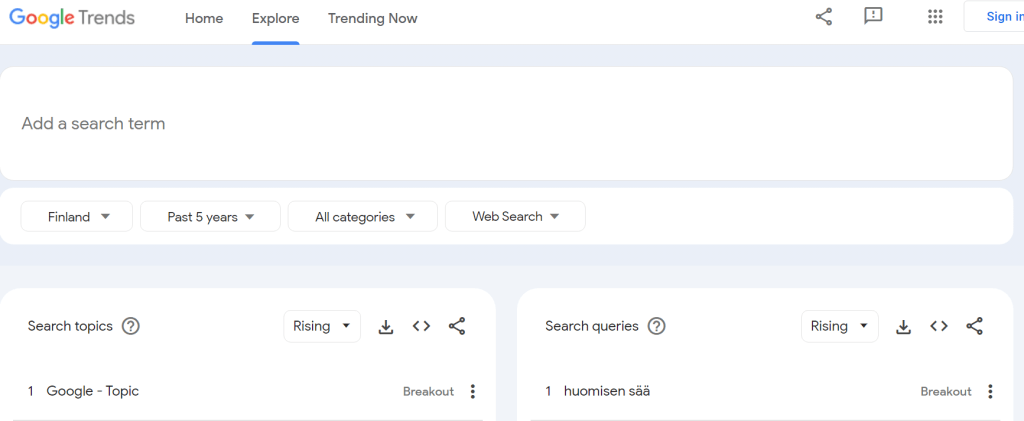
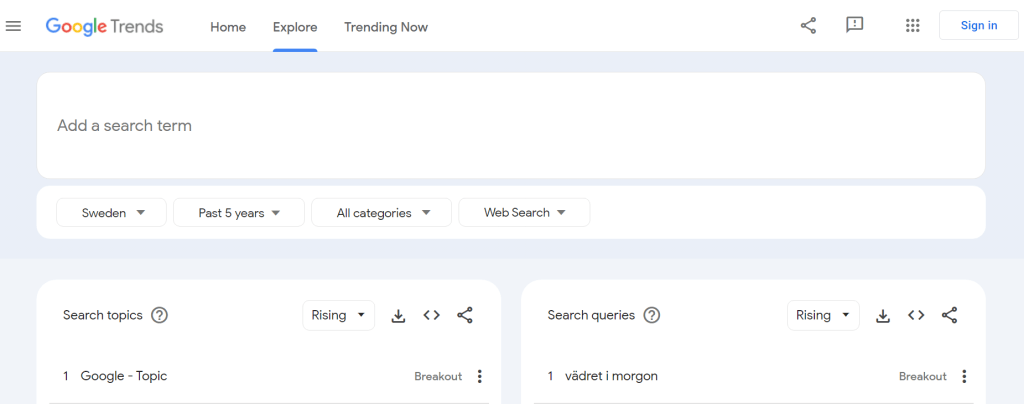
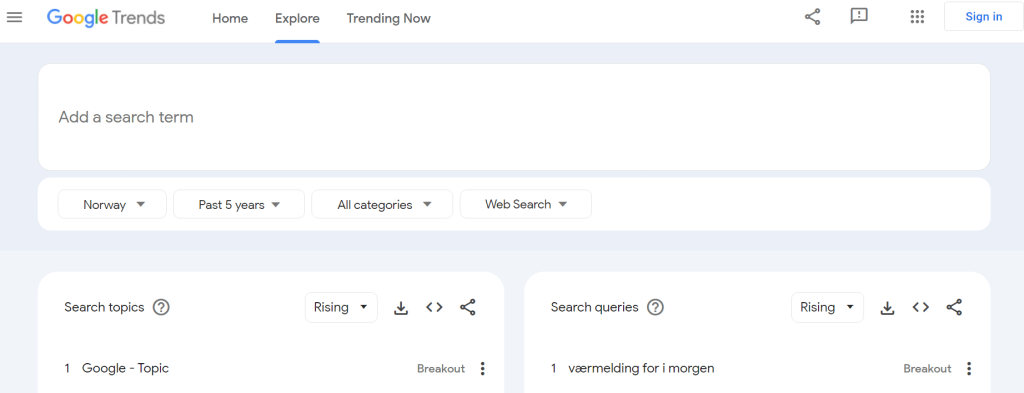
There are many differences between Finland, Sweden, and Norway, but one thing is certain: tomorrow’s weather has received the most search queries in the past five years.
X
Qylitol
In the early 1970s, Finnish researchers at the University of Turku made a significant breakthrough which led to the launch of the world’s first xylitol chewing gum in Finland in 1975.
Y
Yrittäjyys
Finnish is sometimes viewed as negative because it values honesty and directness, which may come across as blunt or pessimistic to speakers of more expressive languages. For example, “yrittäjyys,” meaning “entrepreneurship,” literally translates to “a tryer,” suggesting uncertainty and a lack of commitment. This straightforward communication style can lead to misunderstandings, where neutral statements might be perceived as harsh or critical.
Ystävänpäivä
While many countries celebrate romantic love on Valentine’s Day, February 14th, Finland approaches the day differently by celebrating Ystävänpäivä – Friends’ Day. However, over the past decade, the celebration has gradually shifted to incorporate more international influences.
Z
Zlatan
Last year, I listened to “I’m Zlatan Ibrahimović” on BookBeat, and I really enjoyed it. I found it fascinating that the book wasn’t primarily focused on sports; instead, it told his personal rags-to-riches story. It detailed his upbringing as the son of a Bosnian Muslim father and a Catholic Croat mother in a tough neighbourhood in Malmö, and how he rose to fame from those humble beginnings.
Å
Åland
Åland is an autonomous archipelago belonging to Finland, consisting of over 6,700 islands and located between Finland and Sweden. It is known for its Swedish-speaking population and is celebrated as the sunniest place in the Nordic countries from May to August, making it a beautiful destination during the summer months.
Ä
Äiti
Äiti means “mother” in Finnish, a term that reflects the importance of family in Finnish culture. Finnish mothers are celebrated for their resilience and nurturing, often associated with the deep bond between family members.
Ö
Öky
Last but not least, let me introduce a fun Finnish term: öky. It translates to “luxury,” but it’s often used to describe something that’s overly extravagant, usually with a slightly negative or humorous twist. Imagine someone like Elton John buying a real tram during a wild drug binge—that’s öky! However, in typical Finnish mindset, there’s a more modest, down-to-earth flavor to it.
In Finland, success is often viewed through the lens of humility. Interestingly, the Finnish word for entrepreneur is “yrittäjä,” which literally means “tryer”, as wrote earlier. This reflects the idea that effort you might or might not be successful with your business. So, when someone achieves great success but loses their sense of humbleness—perhaps by showing off their wealth —they might be labeled as öky. But it’s not that straightforward.
This term has a deeper cultural perspective: in Finland, even luxury comes with an expectation of modesty. It serves as a gentle reminder that, no matter how far you climb, there’s always a bit of irony in being too much. The Finnish saying “joka kuuseen kurkottaa, se katajaan kapsahtaa,” meaning “the person who reaches for the spruce will fall into the juniper”, says this well. Essentially, it warns that if you aim too high or strive for something beyond “your league”, you might end up with a worse outcome.
In a country often said as the happiest in the world, this perspective on luxury and ambition adds a special mark to it. Our culture often involves mocking of neighbours who may have something “better,” underscoring the irony in striving for more while emphasizing the value of humility. So, while great success is admired, the importance of staying humble, “not showing off”, is equally cherished.
You might wonder where sisu comes into all of this. I thought that because it’s such an integral part of Finnish culture that it deserves an entire post of its own. While the term has been explained here and there, sisu is so rich in meaning that it requires a deeper dive.
Closing remarks
So, what’s up with the header image, you might ask? I asked the WordPress AI to create a very funny picture of Nordic people in a forest setting, and let’s just say the results were… not quite what I expected!
The prompt was:
“Create a very funny picture in a forest background featuring a group of Nordic characters:
- A Finnish man holding an ice hockey stick who is an old alcoholic
- A trendy-looking Swedish man with snus
- A Norwegian holding a fish
- An Icelandic man with a big beard
- A Danish woman with a unique design project”
So, what was the result? The Finnish guy with the hockey stick seemed to have no connection to Finns whatsoever—or at least none that I recognize.
The trendy-looking Swede appears to enjoy the outdoor vibes over snus.
The Norwegian holding the fish could easily pass for the Nordic version of a grandfather in a Werther’s Original ad.
And that Danish woman? She’s just standing there with a bundle of bulk candles, looking like she’s ready to start a fire hazard! (Her smile is suspicious, like she knows something we don’t.)
As for the Icelandic man, well, who the fuck is he with that fabric stuff coming out of his eyes? Is he trying to start a new fashion trend or just lost in a very strange knitting project? Maybe he’ll kick off a new scene in Iceland for bizarre Finnish competitions, similar as “Wife-carrying” or “Mosquito Swatting Championship“.
What can we make of all this? Are these just silly stereotypes, or are they rooted in something much older—back to a time when people commuted by horse instead of car?
Remember, in the spirit of Nordic friends and rivals, it’s always good to laugh at ourselves and not take things too seriously. I hope you enjoyed the read—or at least made it this far through the long text! Thanks for sticking around!

 Jackinna of all Trades