Croatia has its own unique character, shaped by a mix of Balkan and Mediterranean cultures and a complex history of layers from the East and the West. Having been part of empires, kingdoms, and monarchies, the roots and heritage of modern-day Croatians are an interesting blend of Roman, Byzantine, Slavic, Central, and Mediterranean European influences.
A Quick Look at Croatia’s History:
- Roman-era Croatia (11 B.C. to about the 5th century A.D.)
- Duchy of Croatia (800–925)
- Kingdom of Croatia (925–1102)
- The Republic of Venice and Ottoman expansion (1102–1527)
- Croatia in the Habsburg monarchy (1527–1918)
- The first Yugoslavia (1918–1941)
- World War II and the Independent State of Croatia (1941–1945)
- Socialist Yugoslavia (1945–1991)
- Republic of Croatia (1991–present)
Rich cultural history has been a great muse and the influencer of what Croatia is today from the architecture, fine arts and cuisine perspective.
Split: A City of History and Culture
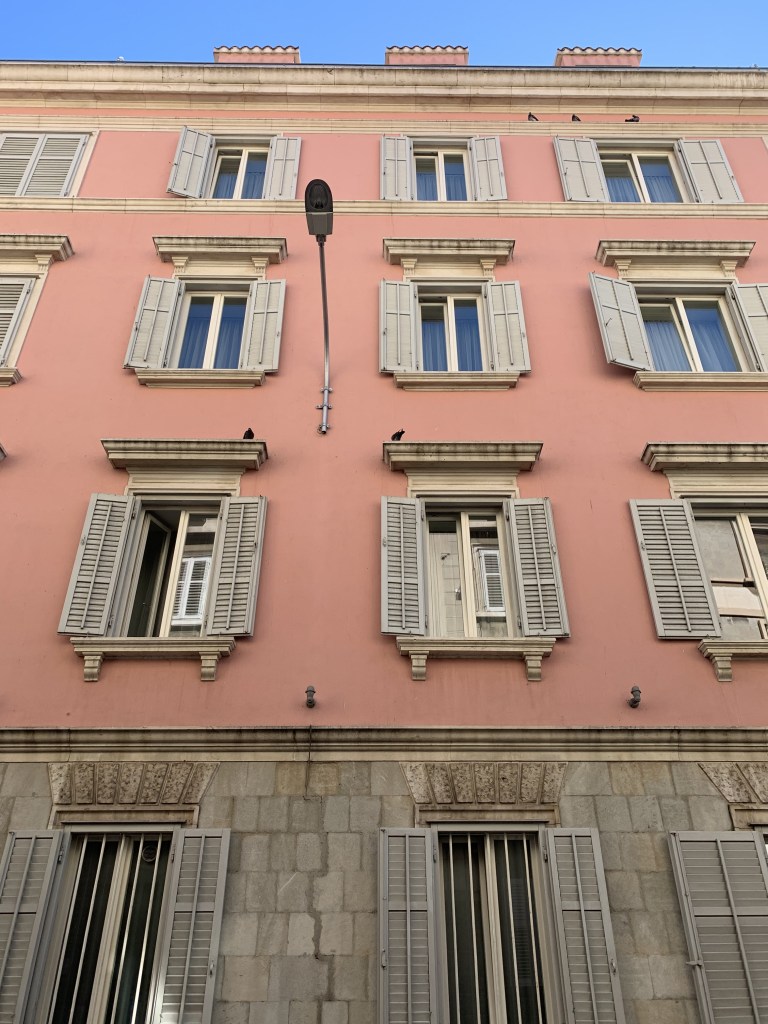
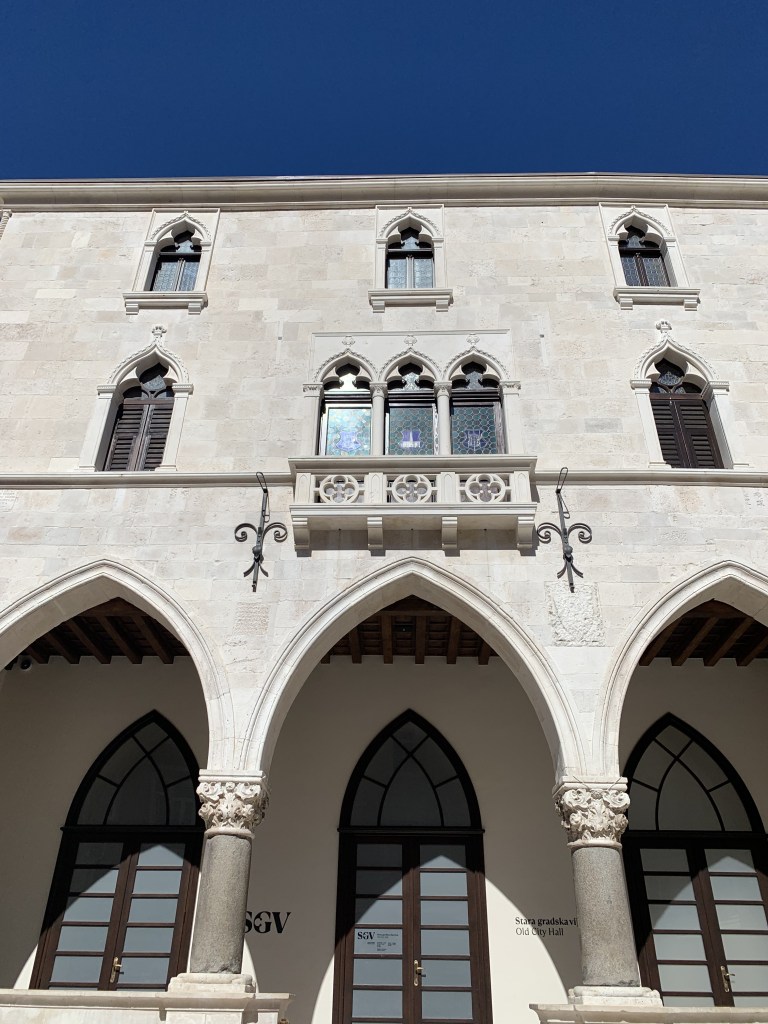
Split, the second-largest city in Croatia with about 160,000 residents, is a must-visit for history and culture lovers. It has two UNESCO sites: the Historic Center and Diocletian’s Palace. The city feels like an open-air museum with its statues, palaces, cathedrals, temples, and stone pillars at every corner.
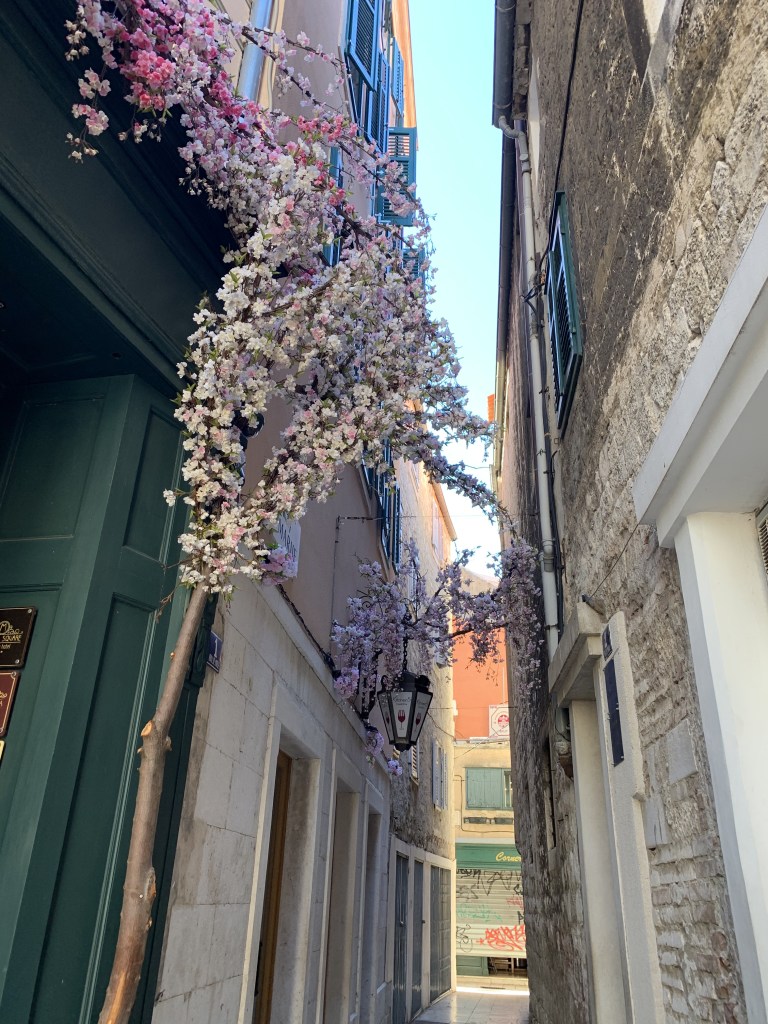
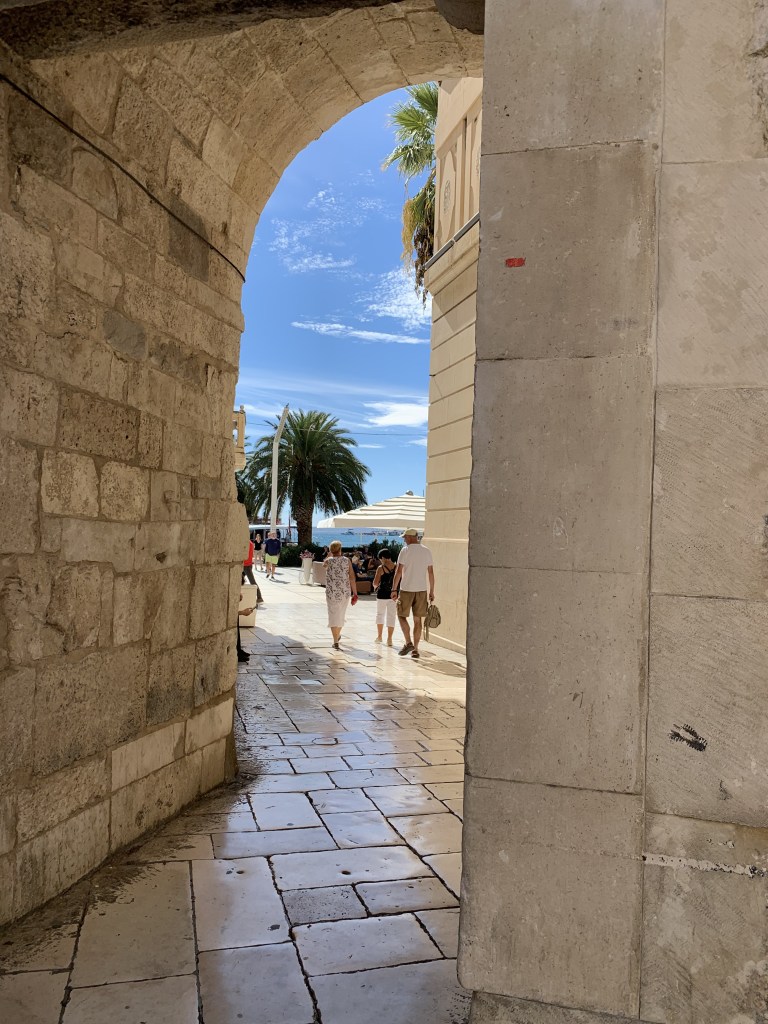
Founded by Aspálathos, a Greek settlement, in the 3rd or 2nd century B.C., and known as Spalatum during the Roman era, Split is full of history. Walking through its narrow streets feels like stepping back in time.

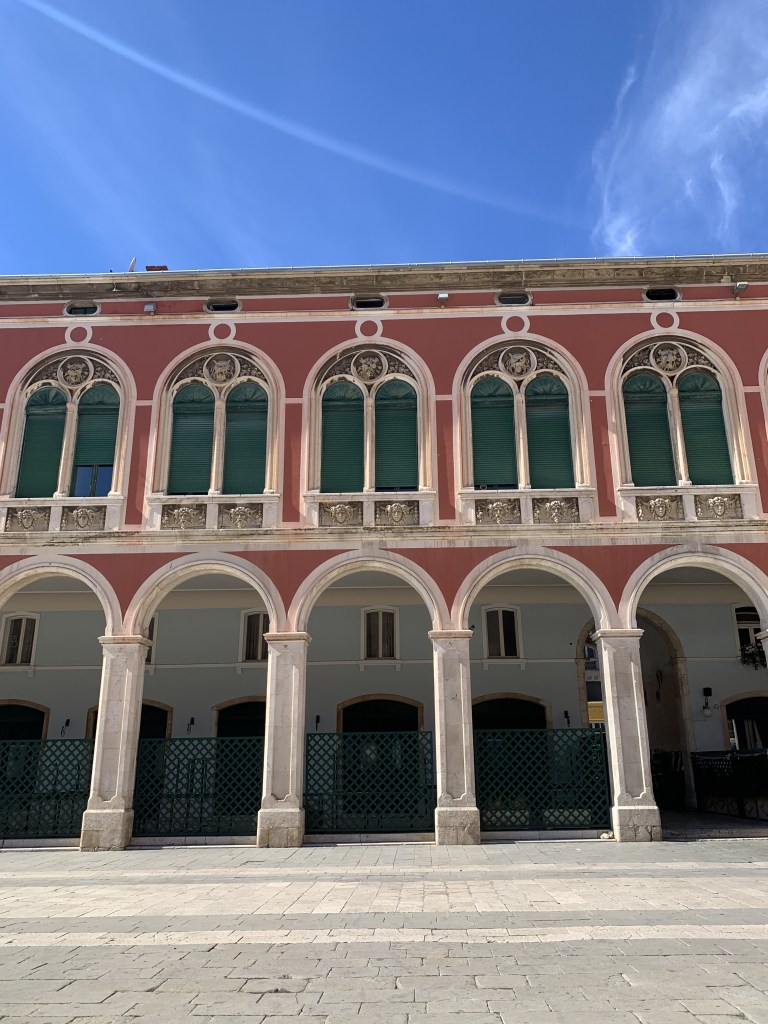
Diocletian’s Legacy in Split
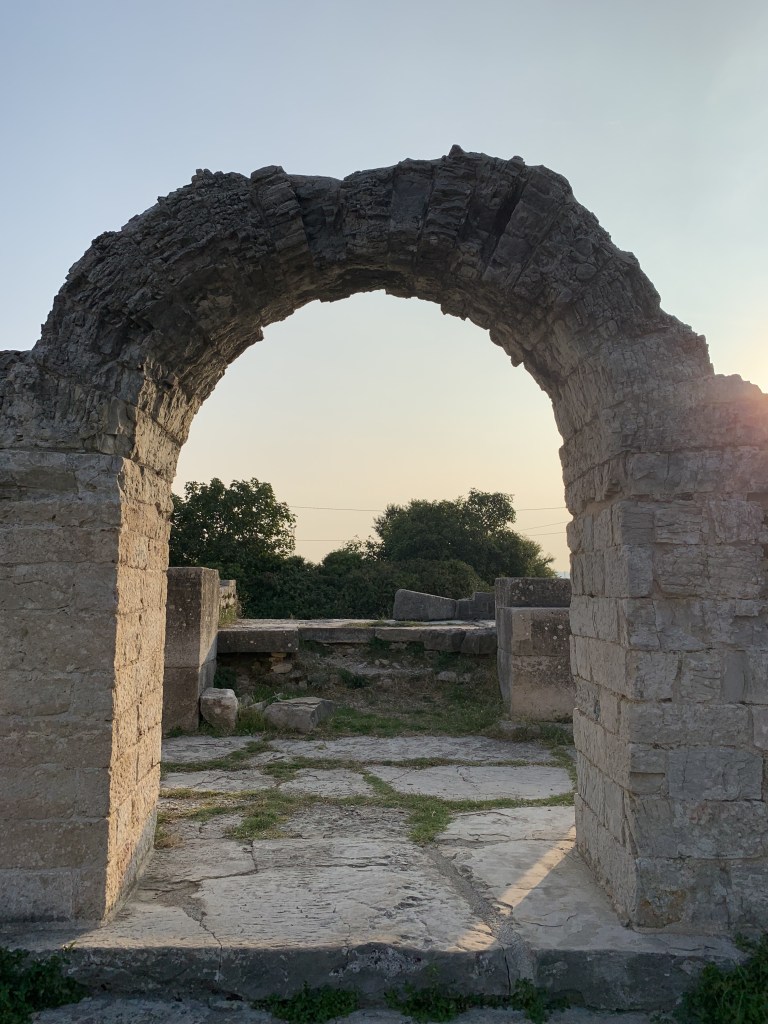
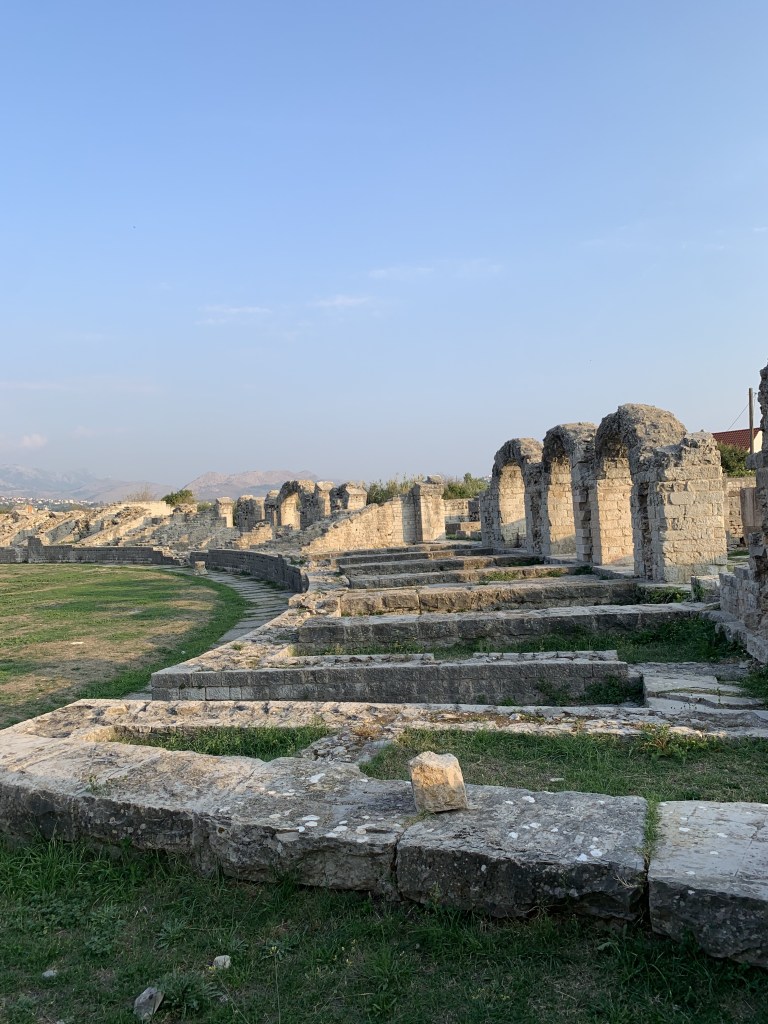

The Roman ruins of Salona, located approximately 5km from the old town of Split
Everyone knows Nero and Caesar, but what about Diocletian? Born in ancient Salona (today’s Solin), Diocletian was a Roman emperor who ruled for over two decades (284–305 A.D.). He made a lasting impact on Split with his reforms in military, architecture, finance, and religion.
Diocletian’s Palace was built as a retirement villa and a military fortress. Its peristyle architecture (a continuous porch with columns) is a beautiful reminder of the Roman and Greek styles. Today, about 3,000 people live within the palace walls, surrounded by restaurants, shops, and apartments. The palace even served as a filming location for Game of Thrones.
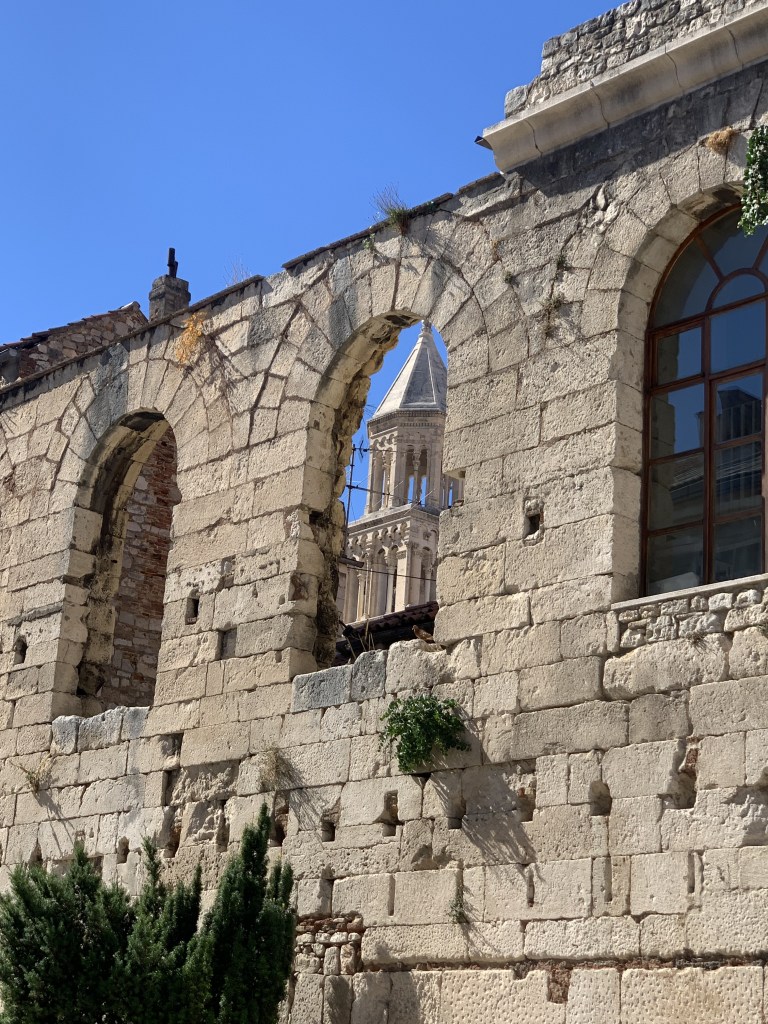
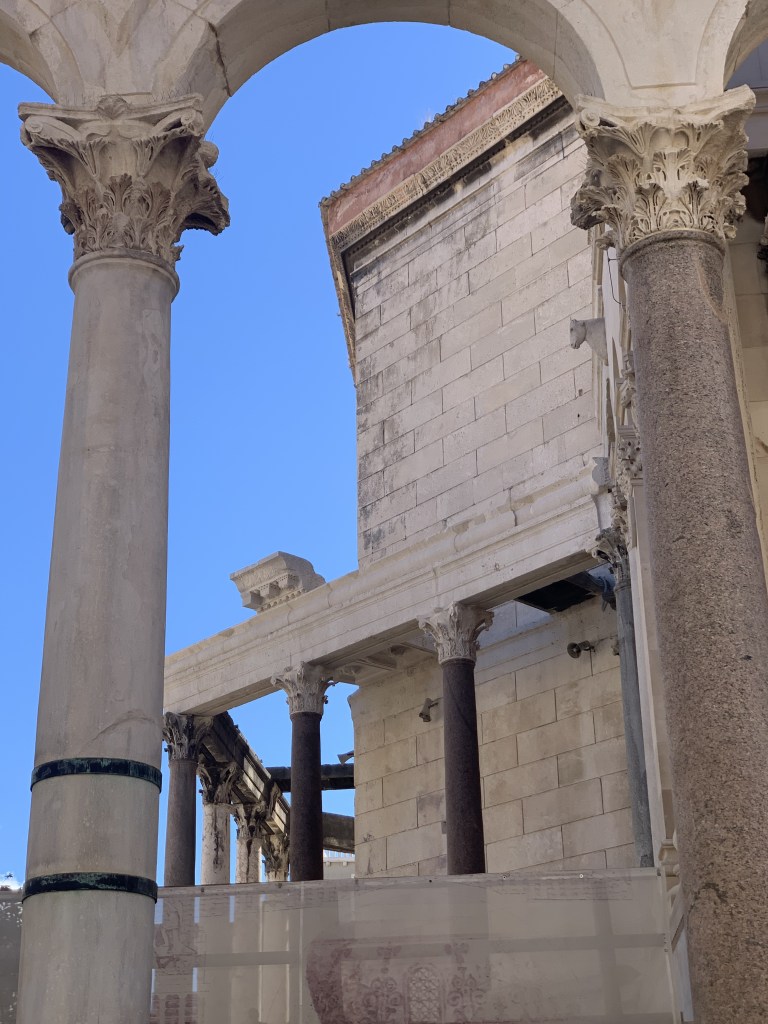
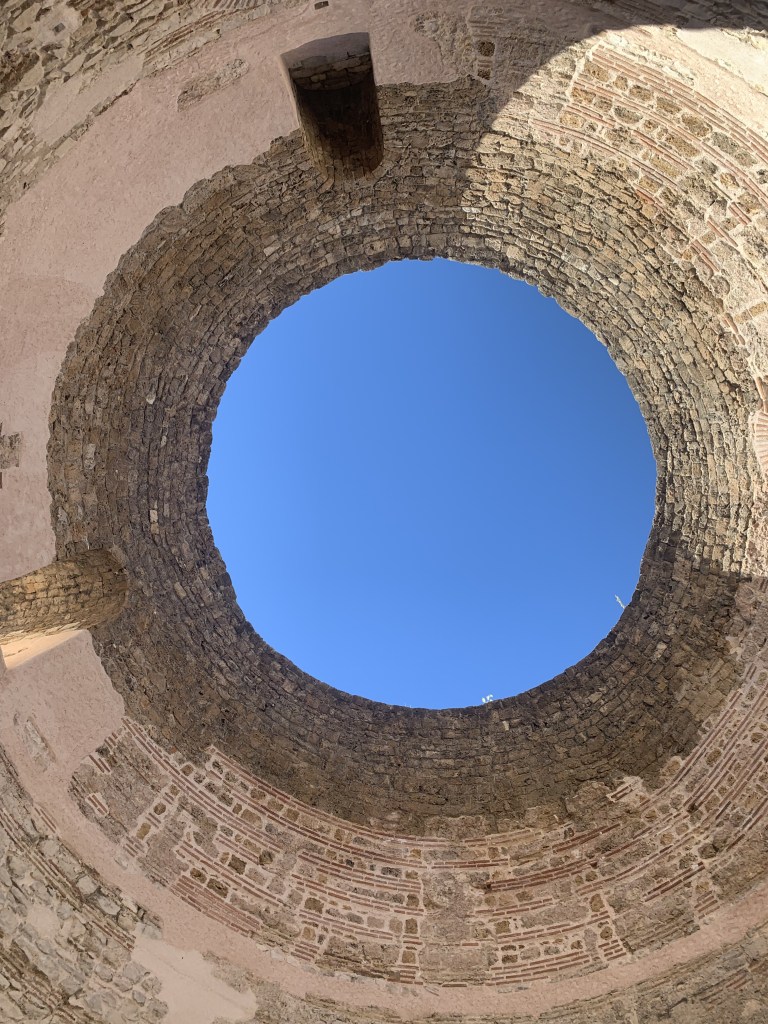
Diocletian’s Palace in Split was built to be a retirement villa for the emperor.
It’s another purpose was to be a military fortress, to protect the inside from the intruders. The place is a peristyle architecture wise, “a continuous porch formed by a row of columns surrounding the perimeter of a building or a courtyard”, style used in ancient Greek and Roman era.
Before

Image is from Tourdesksplit
After
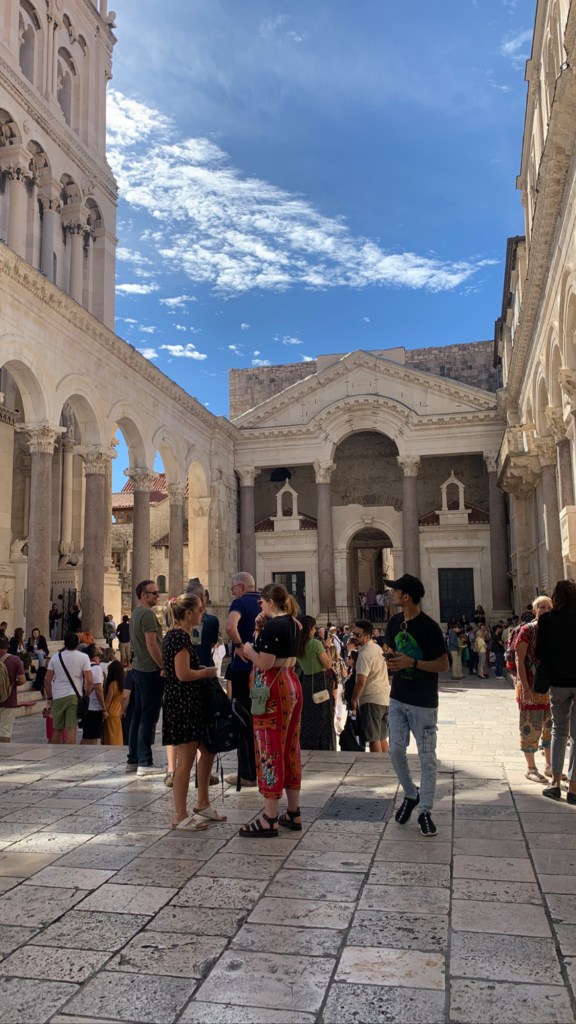
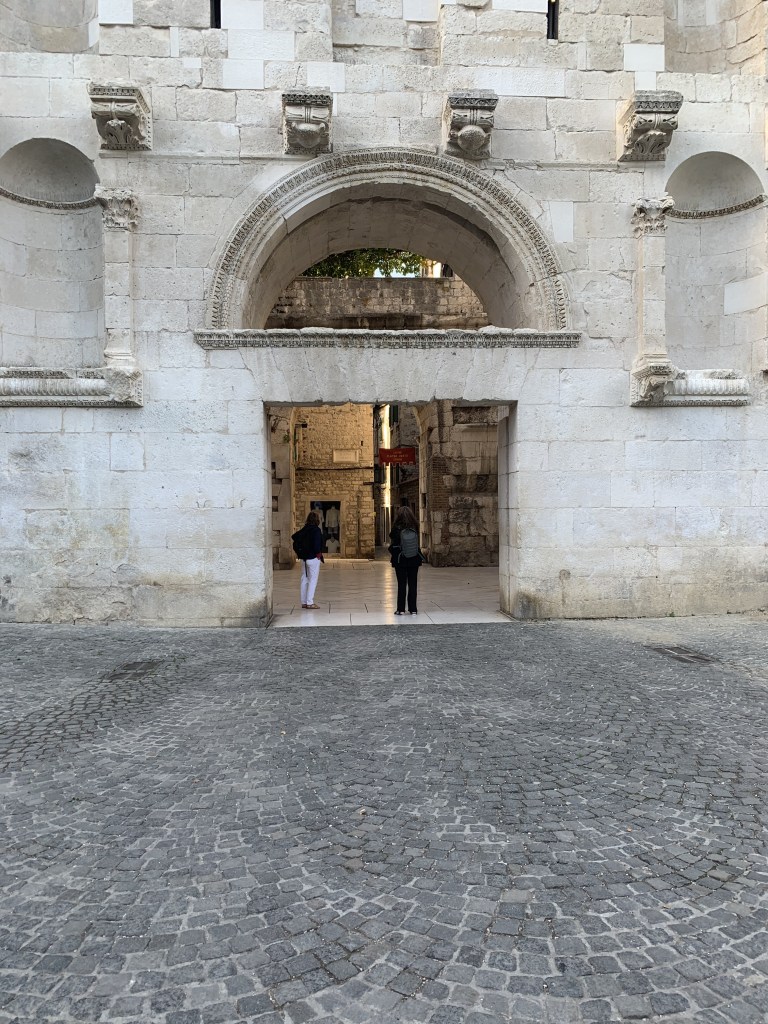
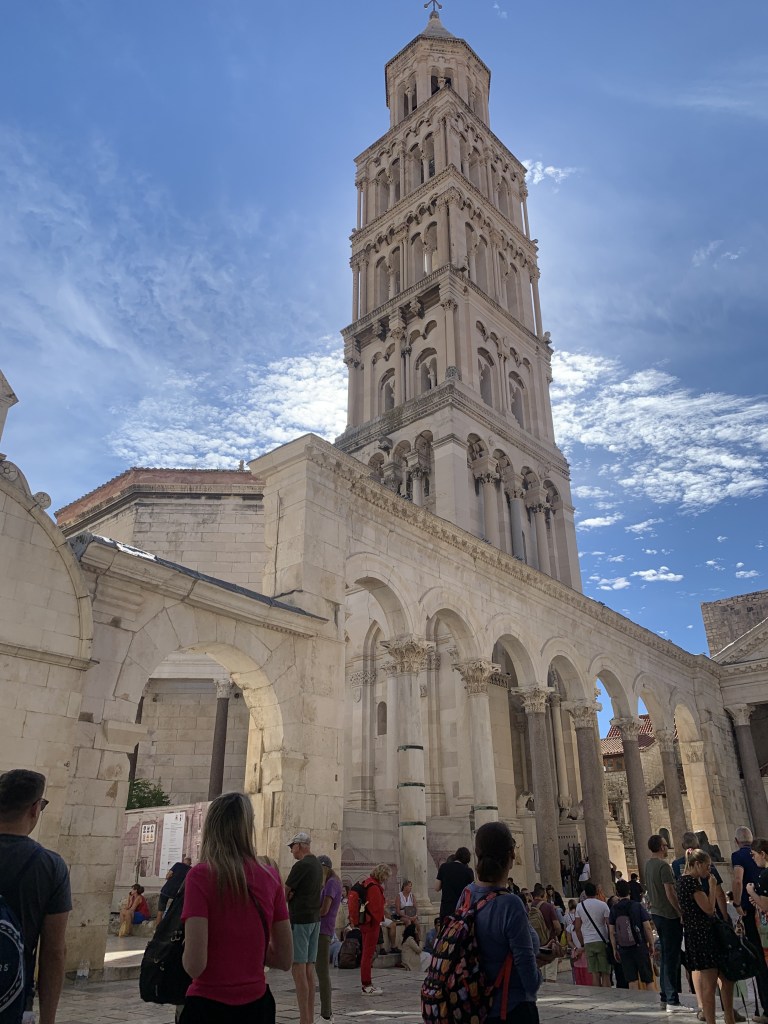
Half of the Split’s old town is formed by the palace and it’s full of restaurants, shops and apartments. Today roughly 3000 people live within the territory of the palace.
In addition, the palace was used as a Game of Thrones filming location. And it’s a center of live music rendezvous.
Every now and then people gather to the palace to listen some live music
A City of Contrasts: Art and Reality
Art is one of the best ways to understand social phenomena. Split’s street art reflects both its history and its present. The Etnographic Museum and the Gallery of Fine Arts are worth visiting to dive deeper into Dalmatian culture and history.
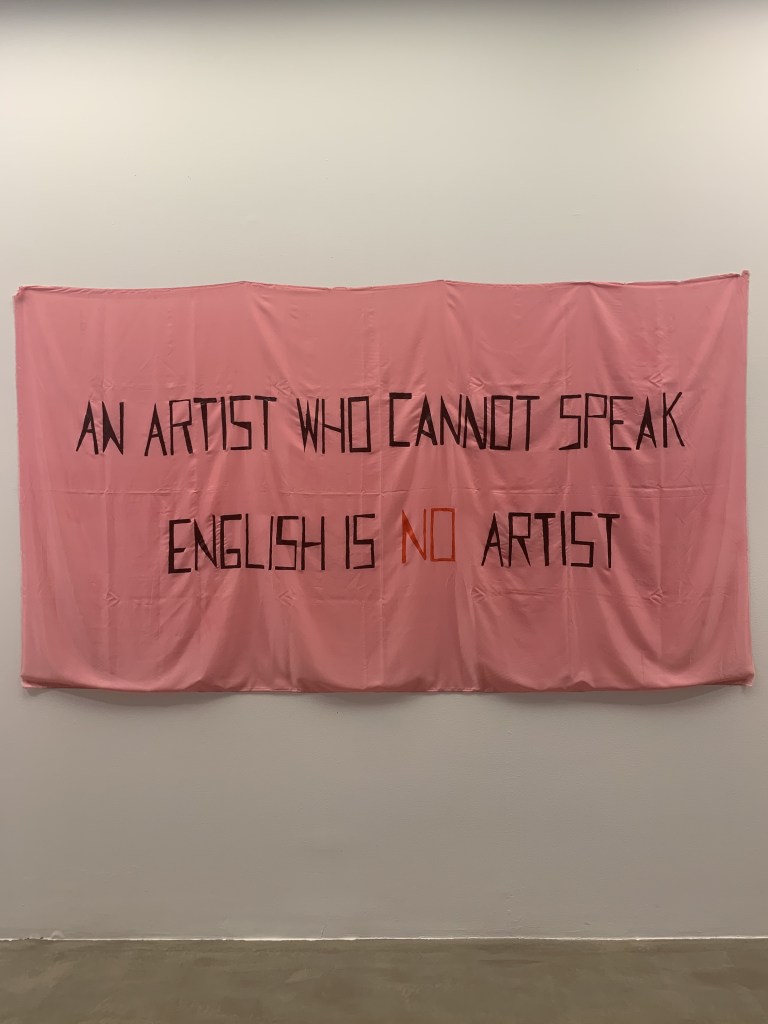
One artwork that caught my eye was “An Artist Who Cannot Speak English is No Artist” by Mladen Stilinović. It was a powerful statement about the dominance of English in the art world.
Something else I noticed was a kind of mockery towards capitalism. An article titled “From Chaos to Capitalism: Telling Tales of Croatia’s Transformation” explains this well. Croatia’s rapid shift from socialism to advanced capitalism in just a few decades has left visible contrasts in society.
For example: While Split’s old town is charming and tourist-friendly, just a 15-minute bus ride away, you’ll see a different reality with signs of poverty. Almost 1 out of 5 Croatians live below the poverty line, a fact that’s hard to see when walking through the polished streets of the historic center.

Mural Možda, “Maybe it would be better if you weren’t here”
Croatia has a distinctive history with its background of being a crossroad to the Eastern and Western cultures and civilizations. Located in the very centre of the old town, Etnographic museum and Gallery of Fine Arts are good spots to get deeper the city’s vivid history – translated by art.
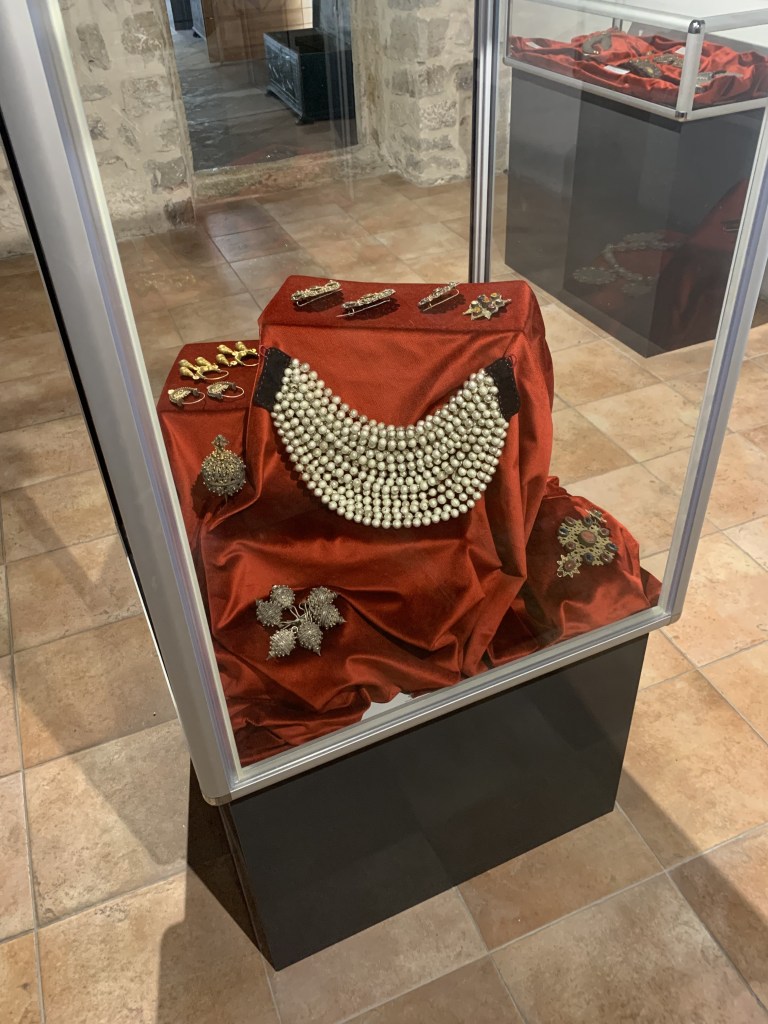

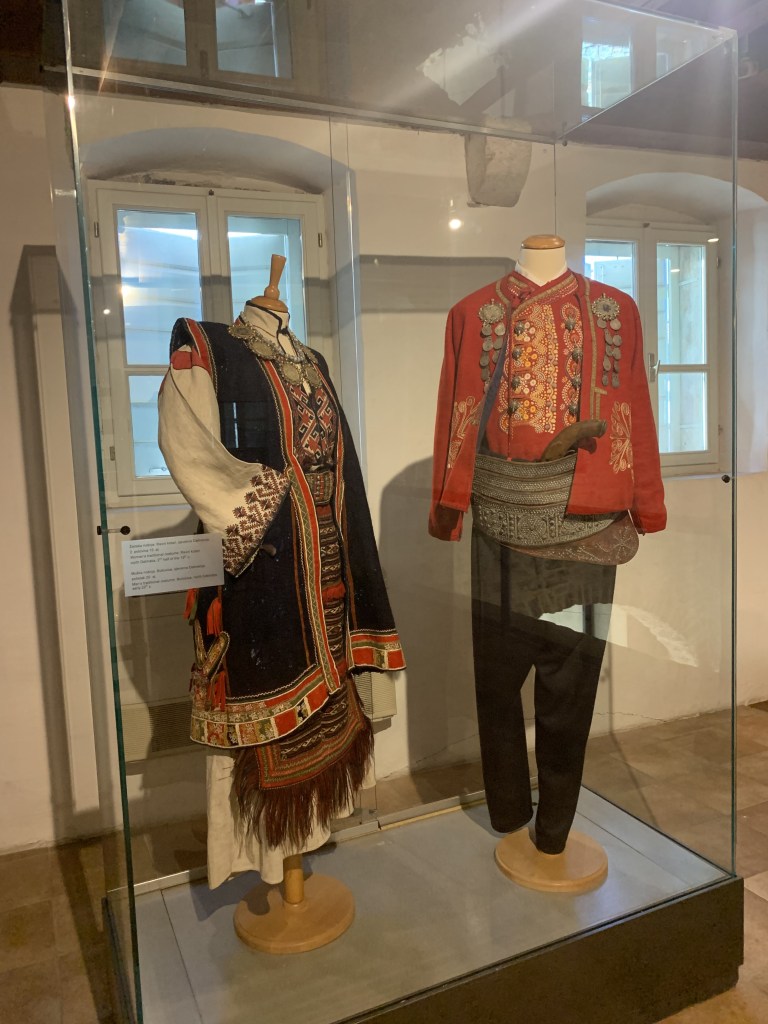
Etnographic museum of Split consists of a collection of local cultures, customs and habits representing Dalmatian hinterland and the Adriatic with traditional costumes, jewellery, art, weapons and furniture.
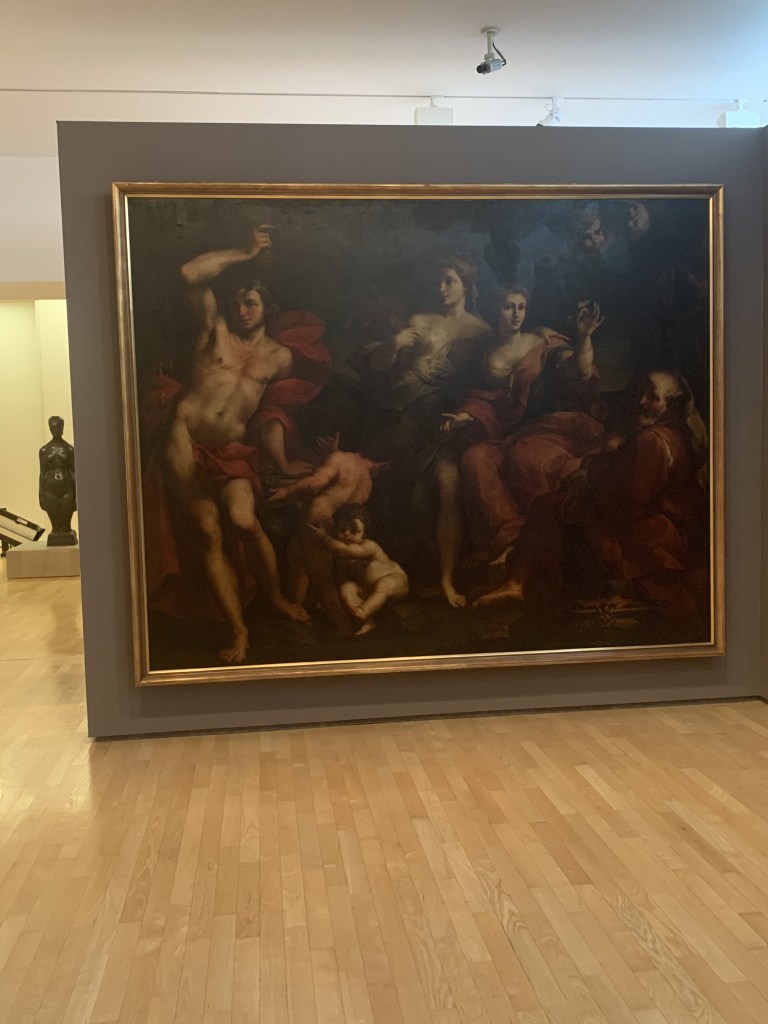
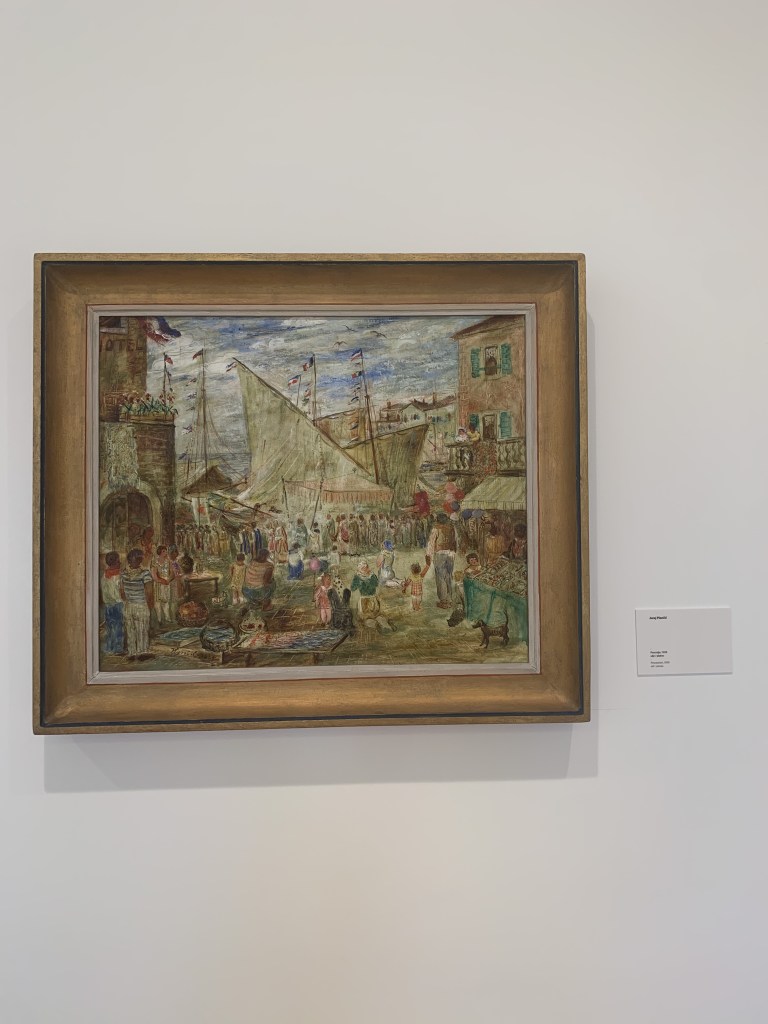
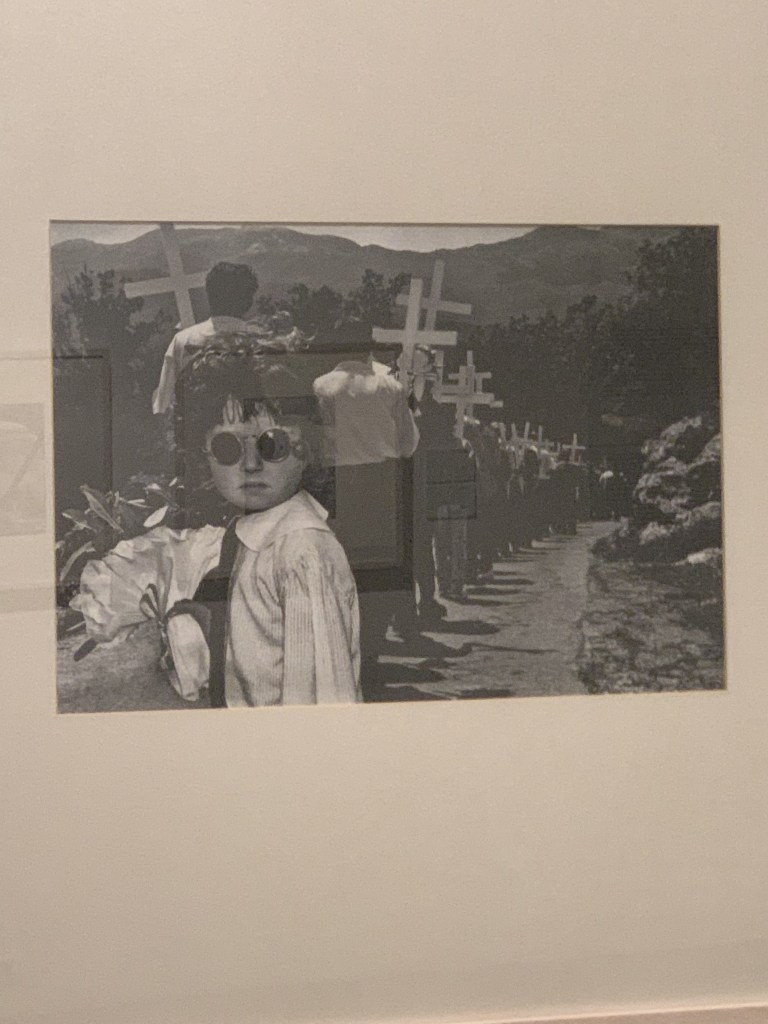
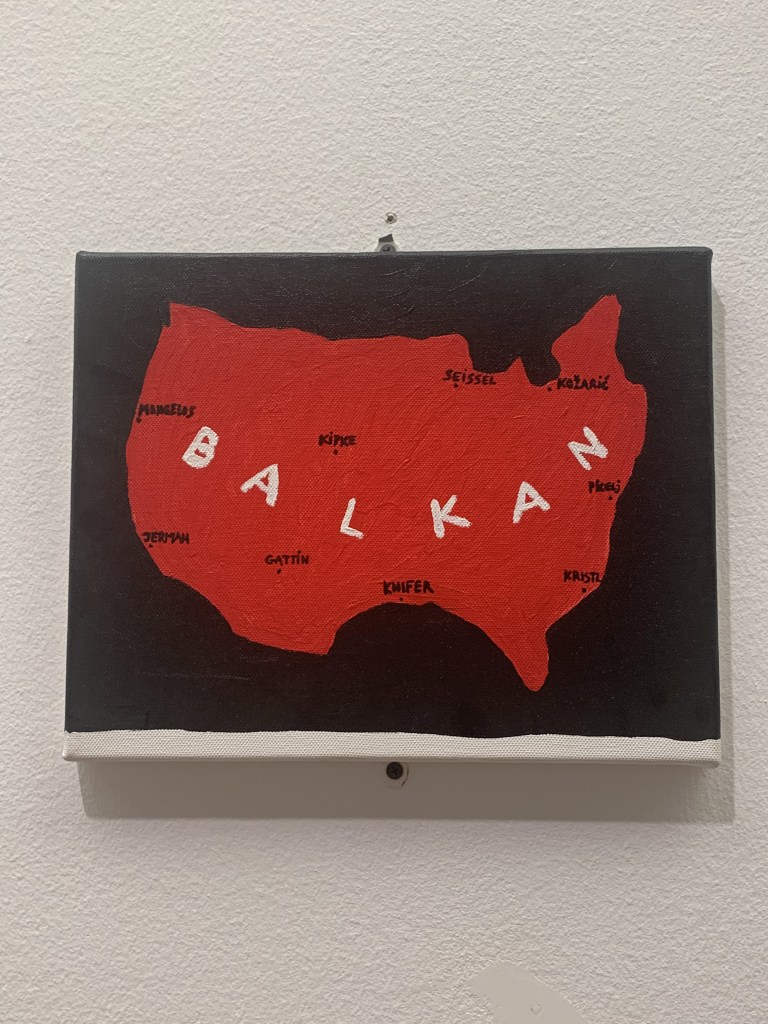
Split Gallery of Fine Arts, opened in 1931, represents the artwork from Venetian Republic, Empire of Austria-Hungary, Socialist Yugoslavia and the Republic of Croatia.
An Artist Who Cannot Speak English is No Artist -artwork is by Mladen Stilinović, a statement of artists working under the dominance language of English. It’s pretty powerful to find something like this in the old town.
Something I noticed though was some kind of mockery towards capitalism. Had to understand better. Found an article, From Chaos to Capitalism: Telling Tales of Croatia’s Transformation, which does dig deeper to the aspect.
“In the last 30 years, we have made the transition from a phase of severe nationalism, the dismantling of socialism and the opening of the doors to capitalism to a phase of consolidation of advanced capitalism and becoming a polite European ‘post-conflict’ society in which tensions are still, unfortunately, lingering beneath the surface”
“What existed in parallel to the chaos of war in the 1990s was a certain euphoria connected to the arrival of the free market and consumerism, and it seems that today we are living in that ‘wet dream’. Waking up from the dream, we can see the destruction of industry, thousands of unemployed people and the disintegration of pillars of society such as public health and education.”
As the article explains, the country has made such a tremendous transition very fast, just in few decades, which is just matter of seconds in a perspective of a country with roots to Roman Empire.
Something you cannot see in the old town of Split is poverty. Taking account, that almost 1 out of 5 people of Croatia is living below the poverty line, it’s all cleaned out from the city landscape. Besides Croatia other countries with similar poverty lines are Laos, Portugal, Peru and Jamaica. Not saying that poverty is something that should be around Split, no, but it’s kind of a contrast one must acknowledge while visiting the city. When you go by bus a 15min away from the charming old town, you’ll see totally different world. Split as a city isn’t just about cute cafés and colorful doors, it’s a real, somewhat harsh yet truthful reflection of what the city is also about. It’s a split of past of glory and echoes of post-socialism.
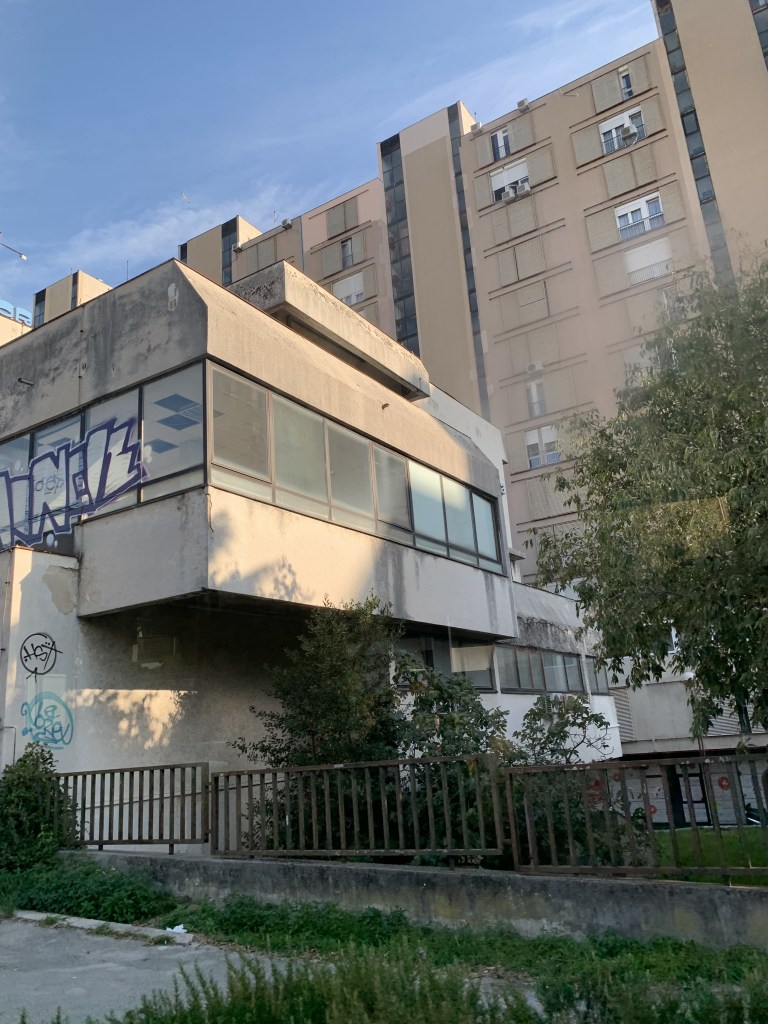
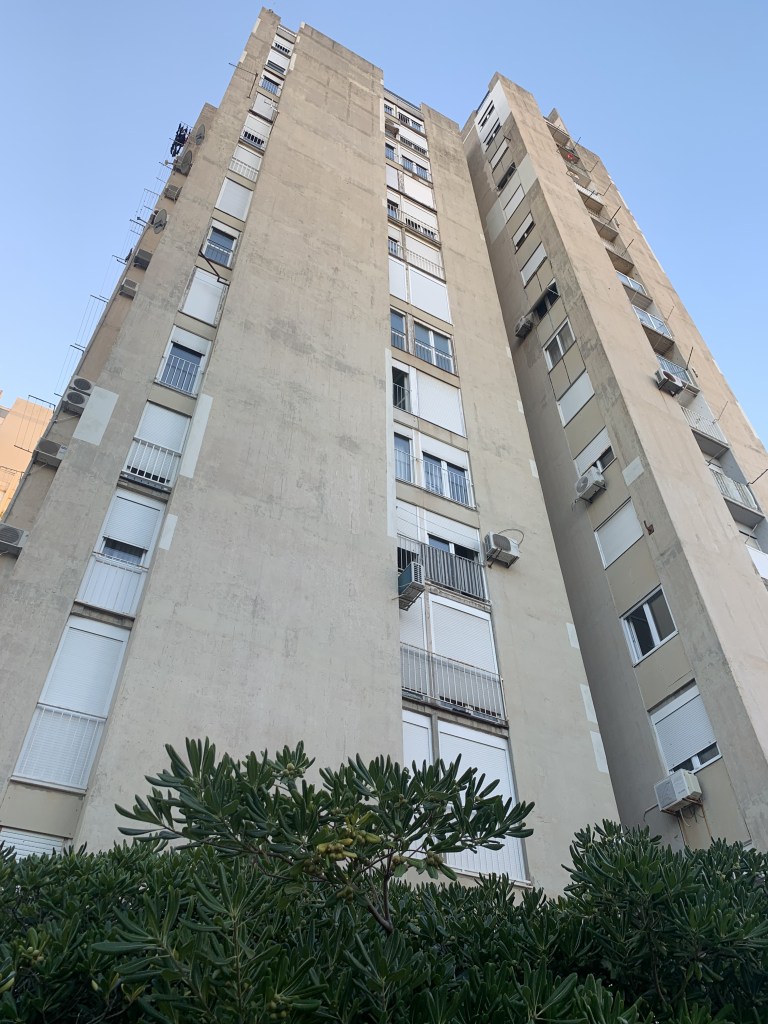
Based on my experience the city is safe and clean. Interesting combination of history and touristy. You see and hear English speaking everywhere. Locals speaks it close to perfect no matter what are you having a discussion with a cleaning lady, hotel manager, reception at a museum or someone waiting for the football tickets, everyone does it. Except an Uber driver and a bus driver (when I was heading to the Motor mountains) based on my experience. I was very surprised of the observation.
About people from different social and economical circles living their everyday life. The more I turn closer to 40 I am thinking of these aspects. And thereby I was bit struggling whether the whole city of Split is the reflection of the old town, or is there another “reality” somewhere. Had to find out and luckily I did as it had broaden my perspective on the city.
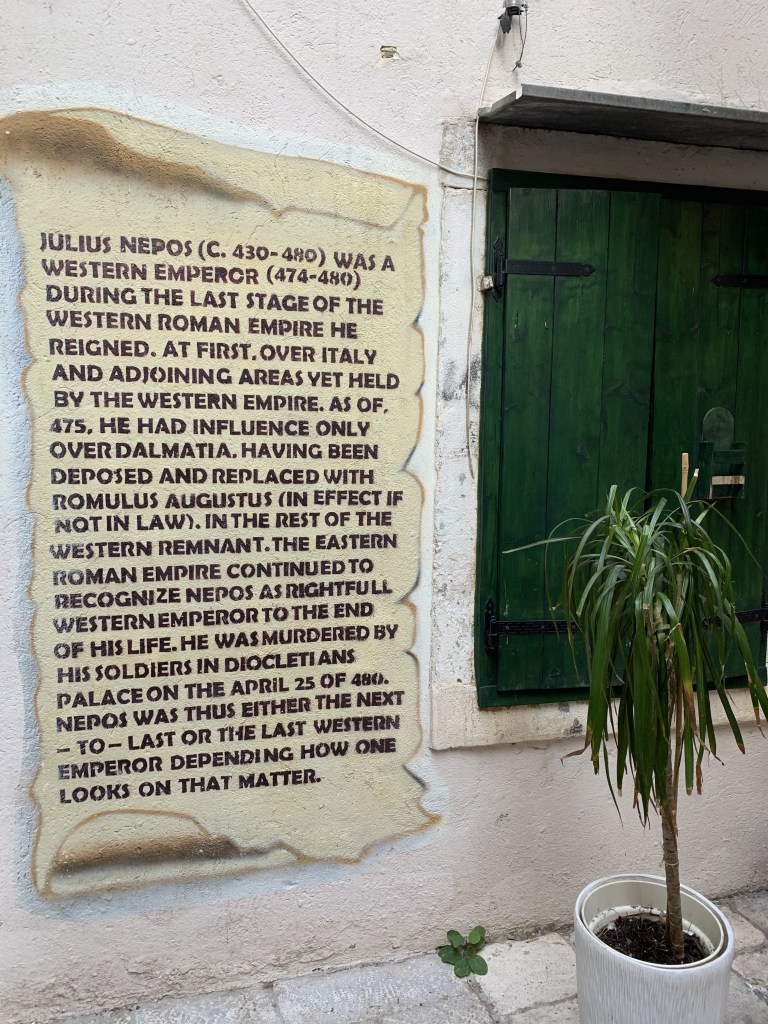
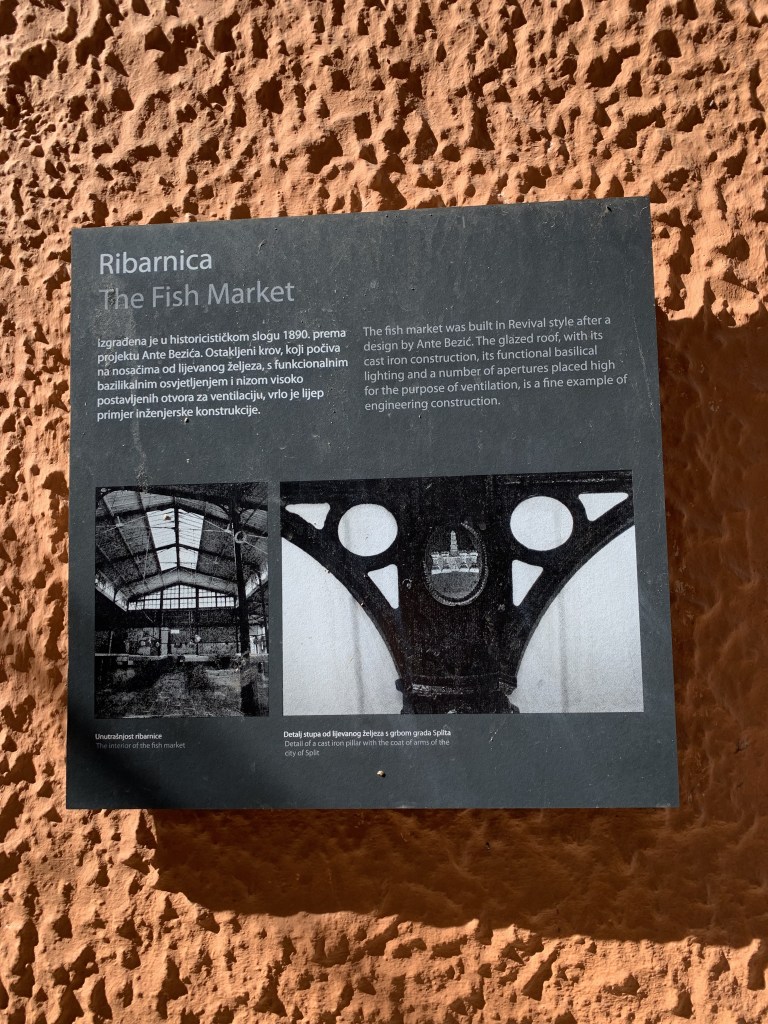
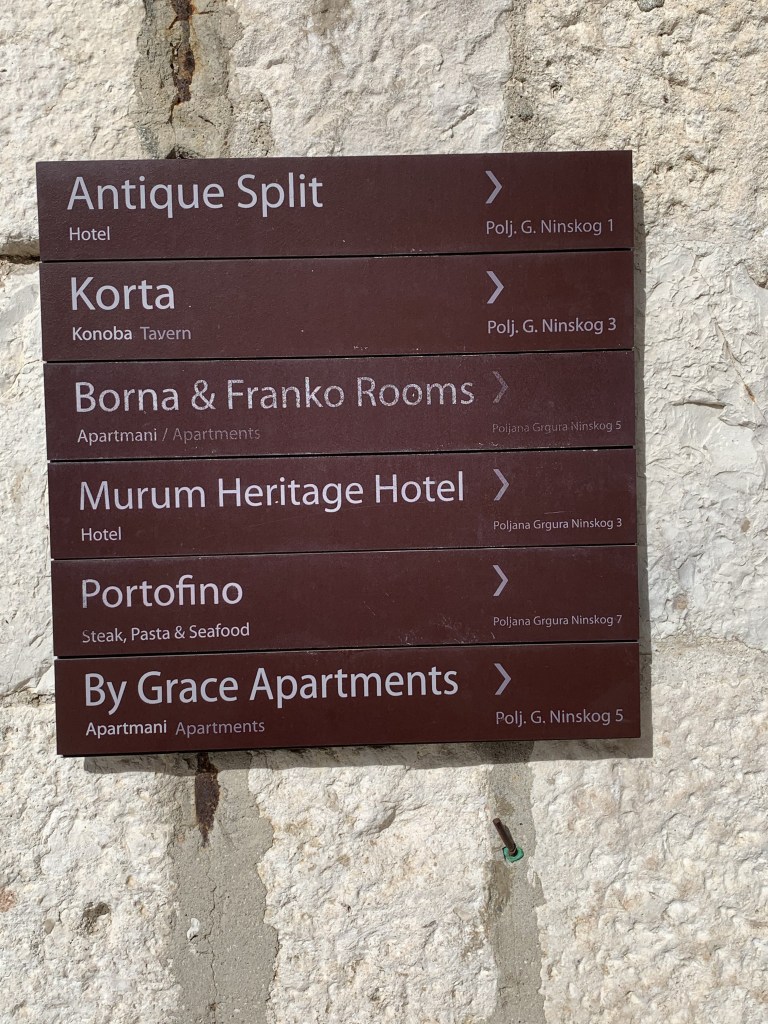
Informative (English) signs literally everywhere.
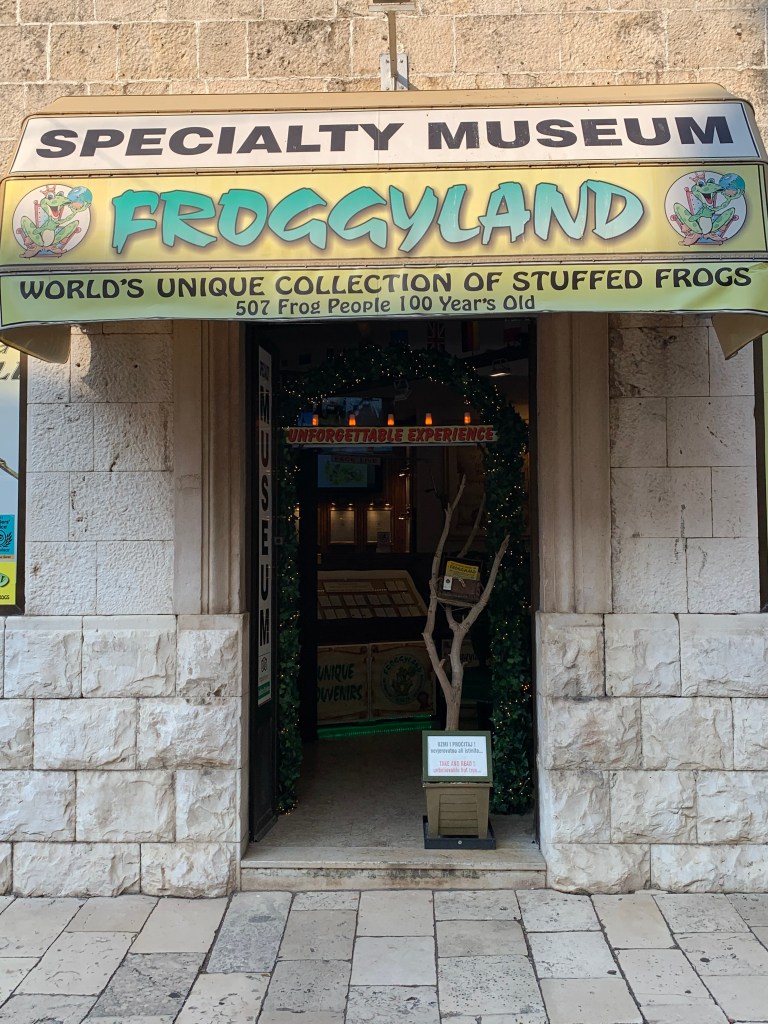
In Ul. kralja Tomislava -street you see most likely the weirdest museum ever, a frog museum called Froggyland, stating as “Museum of the best taxidermy in the world” and just few blocks away you’ll enter to the magnificent Diocletian Palace. Kept walking down the streets.
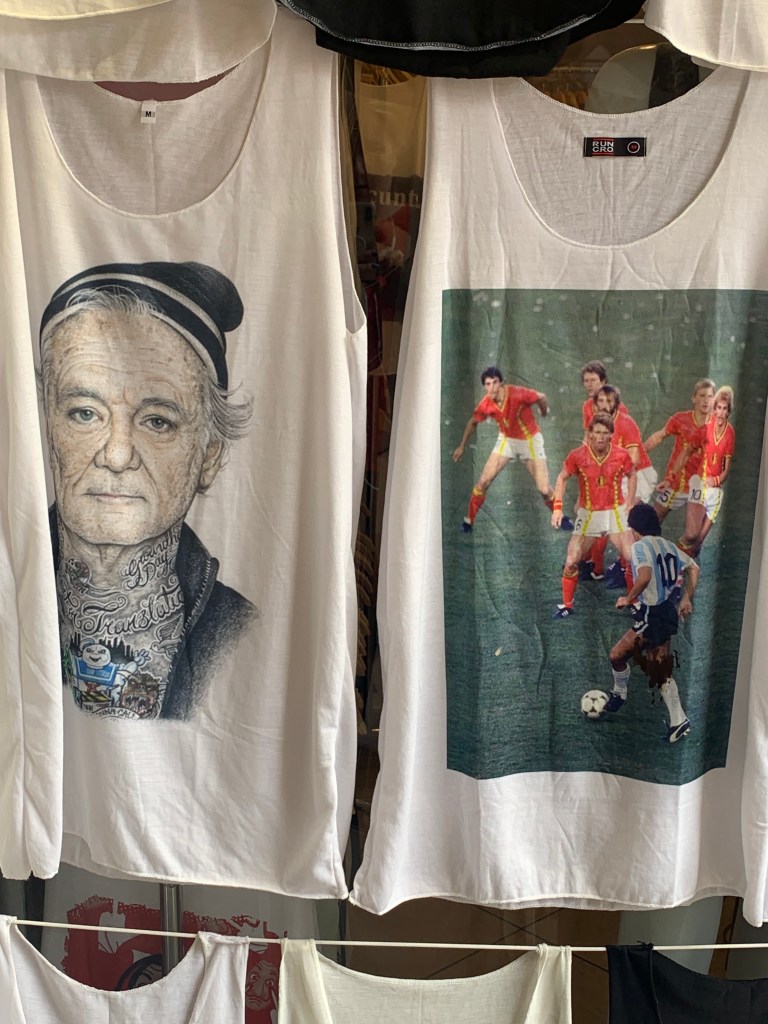
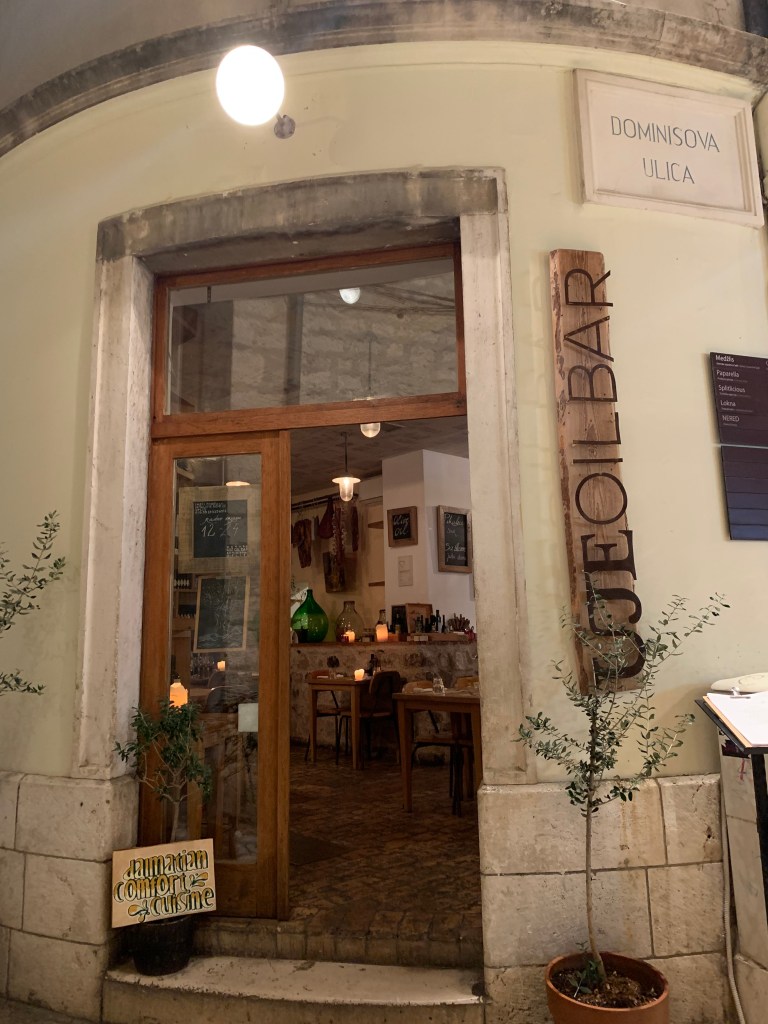
When I went for a day trip to Trogir, which center is a Unesco list of World Heritage Site, I got to know a Guatemalan-born Luna and his British father Steven. We just started to discuss while waiting the transportation, a ship, to come eventually spending few hours in the town by wandering around and having a chat. In the evening upon arrival to Split, we went for a very nice restaurant, Uje Oil Bar, which turned out to be a gem (don’t understand why it’s listed as #81 out of 445 restaurants in Split as it was such a brilliant place).
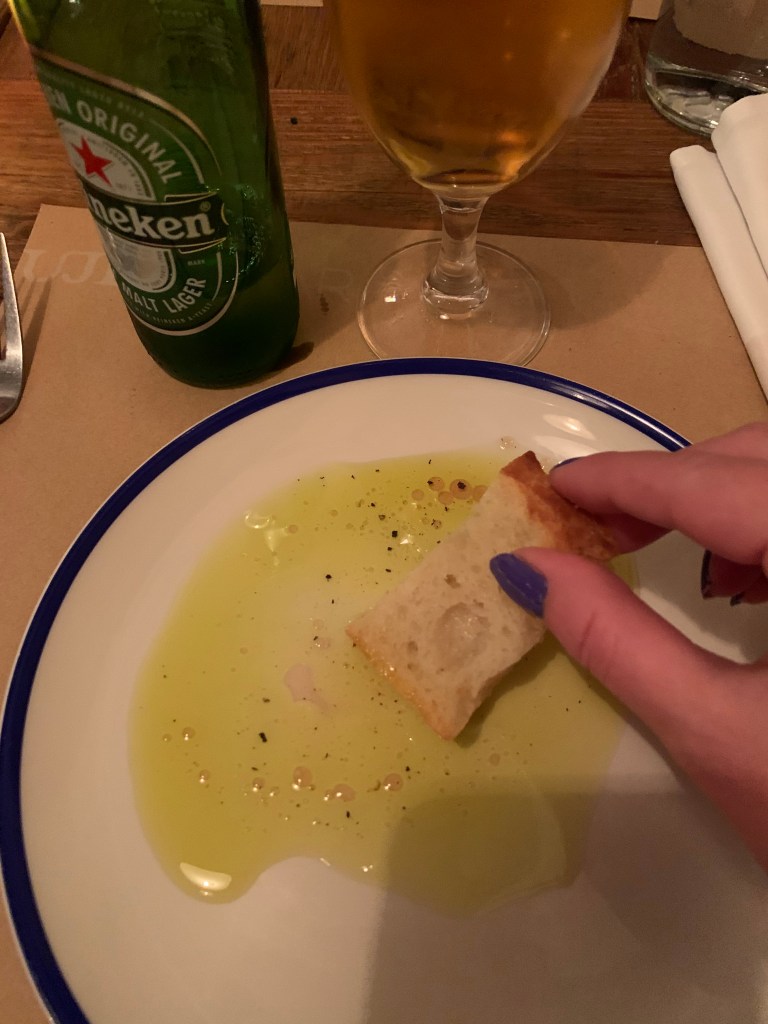
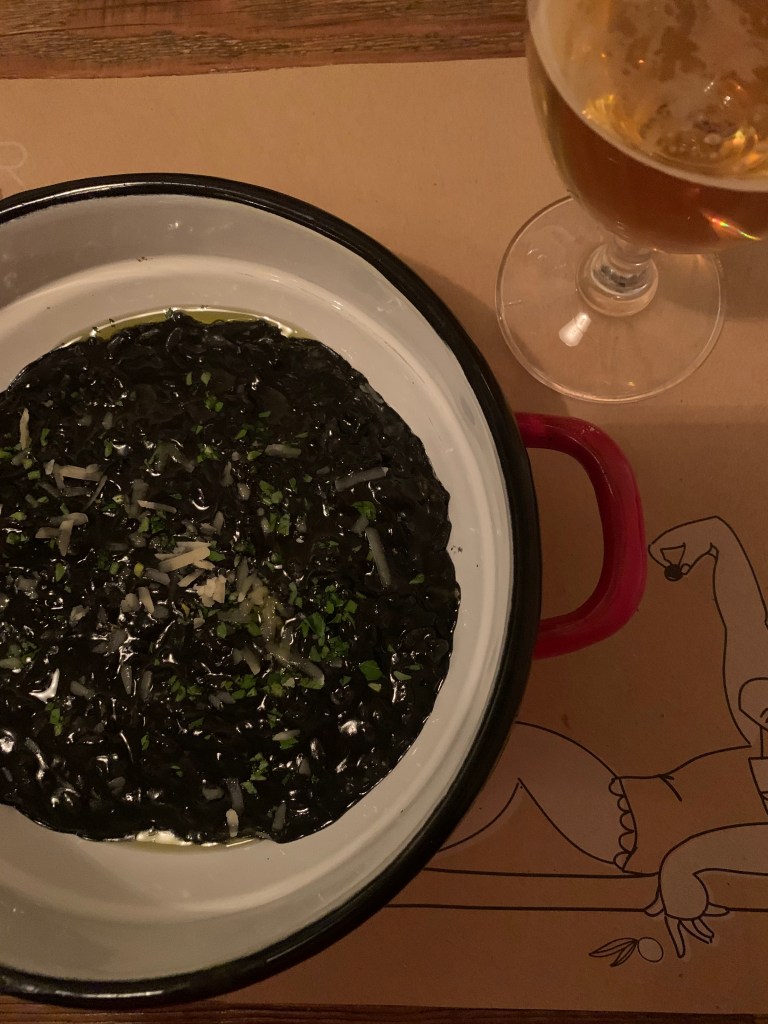
Enjoyed the olive oil experience, which consisted fresh bread and the experience itself; layer of olive oil, vinegar, salt and pepper. It was such a diplicious moment. For the main I ordered black risotto dish, which turned out to be one of the greatest risottos – if not the greatest – I have ever had in my life. Purchased a cherry vinegar (and lavender spices, tea (marzipan, lavender) from a lovely spice and tea shop, Harissa). Will definitely repeat the experience at home.
Few days later I went for a quick bit to the Riva promenade and found a burger place there, not recall the name of the place though, where I saw a servant did put my macho burger (yes I was macho hungry so anything smaller than a macho couldn’t be enough for me) to be warmed at a microwave. Totally dealbreaker. Ordered some “Belgium fries” to go with, which turned out to be the most basic fries ever had. I’d be upset if I were a Belgian there.
Football: More Than Just a Game
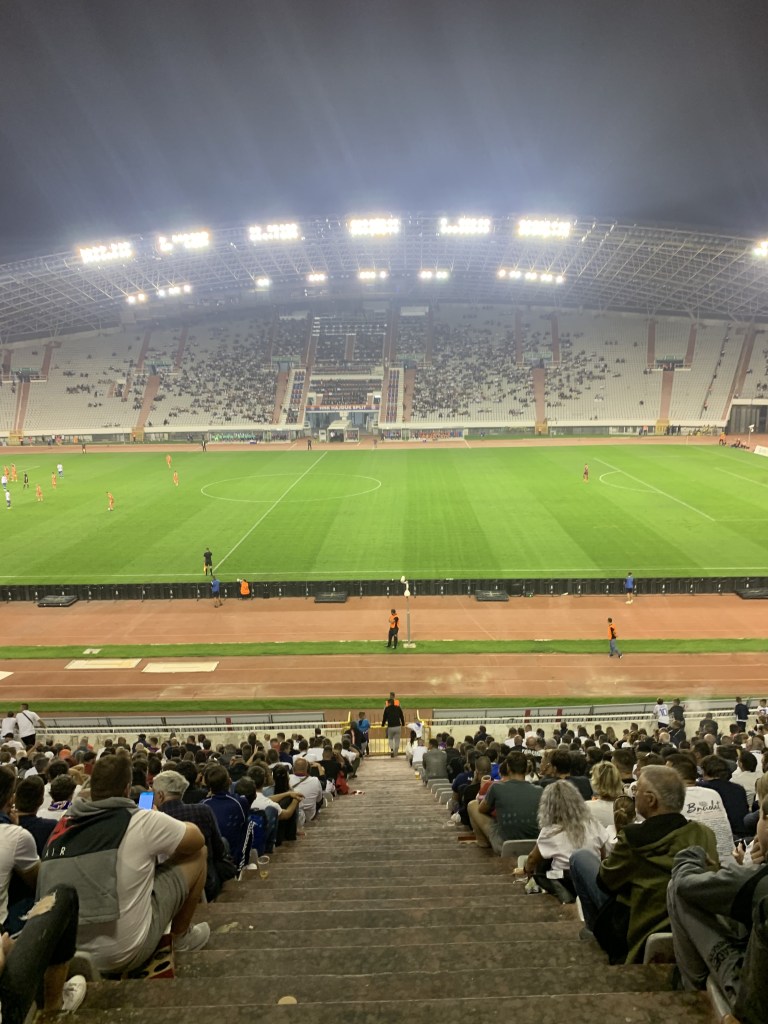
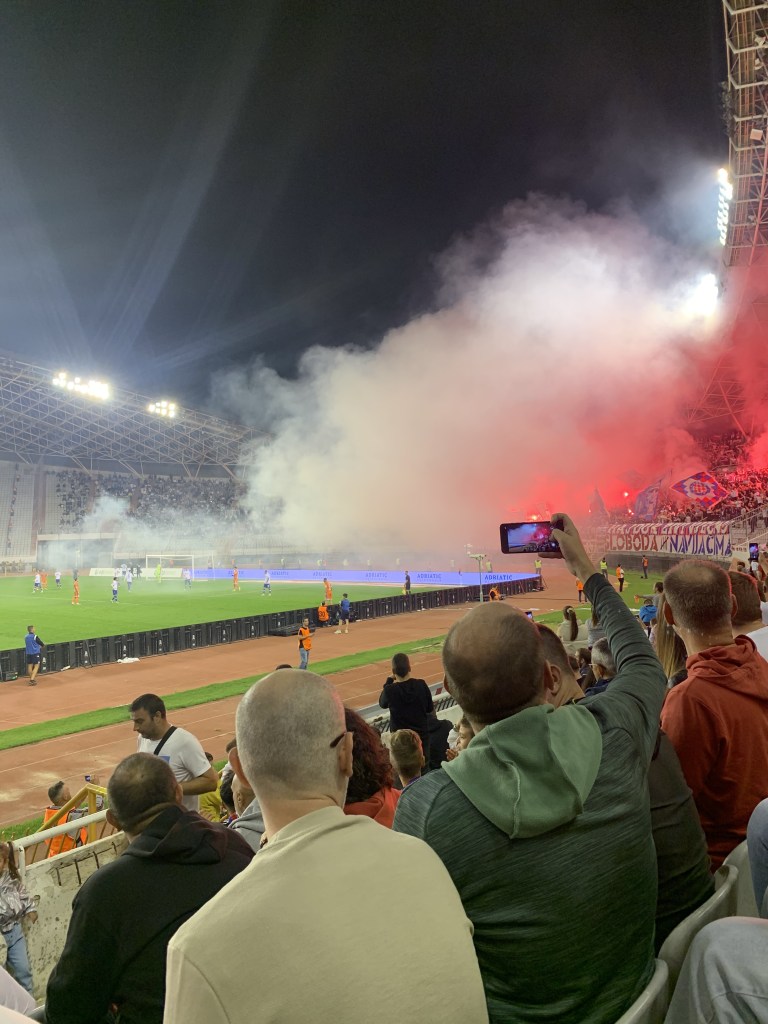
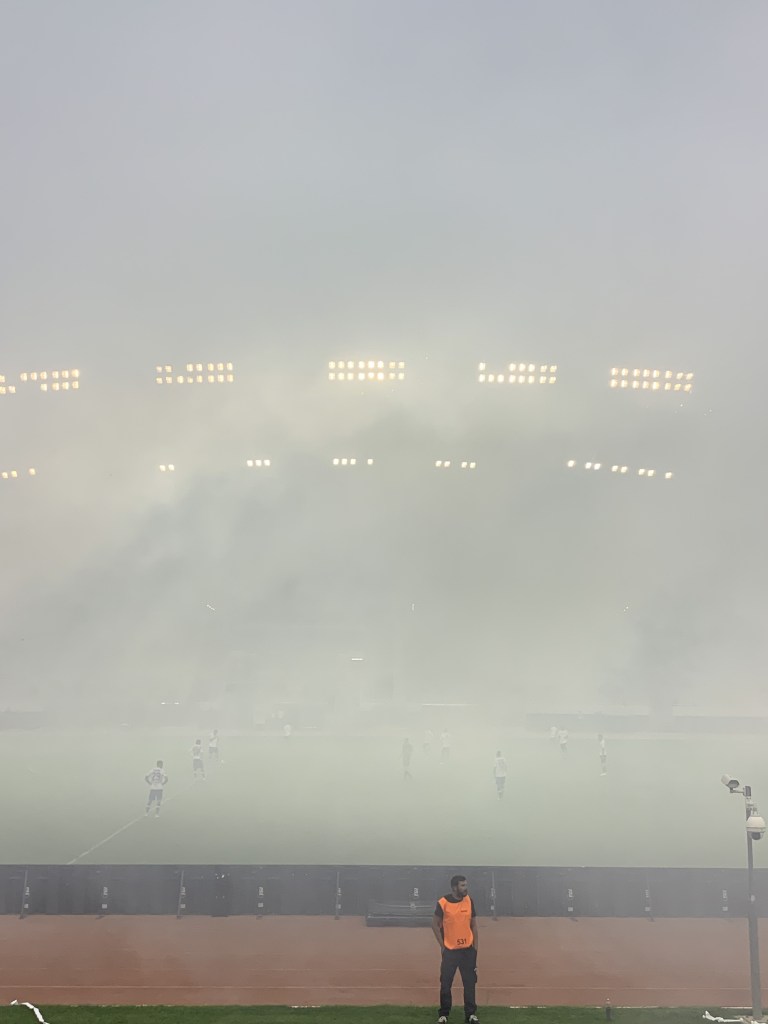
Football is a big deal in Croatia. I was lucky to get tickets for the Hajduk Split vs. Varaždin game at Poljud Stadium. The atmosphere was incredible, with fans lighting colorful flares and cheering passionately. The game ended 2-1 for Hajduk Split.
The game was incredible; the cheering was beyond what I could have excepted. Fans did set up a colorful smoke flare, which was something I have never seen before. Excited game ended with 2-1 for local team win, respectevely. There were families, friends and apparently two Finnish widows united – as I game to recognize that my fellow-widow, Merja, from a sorrow group also did travel to Split at the same time as me. Small world indeed.
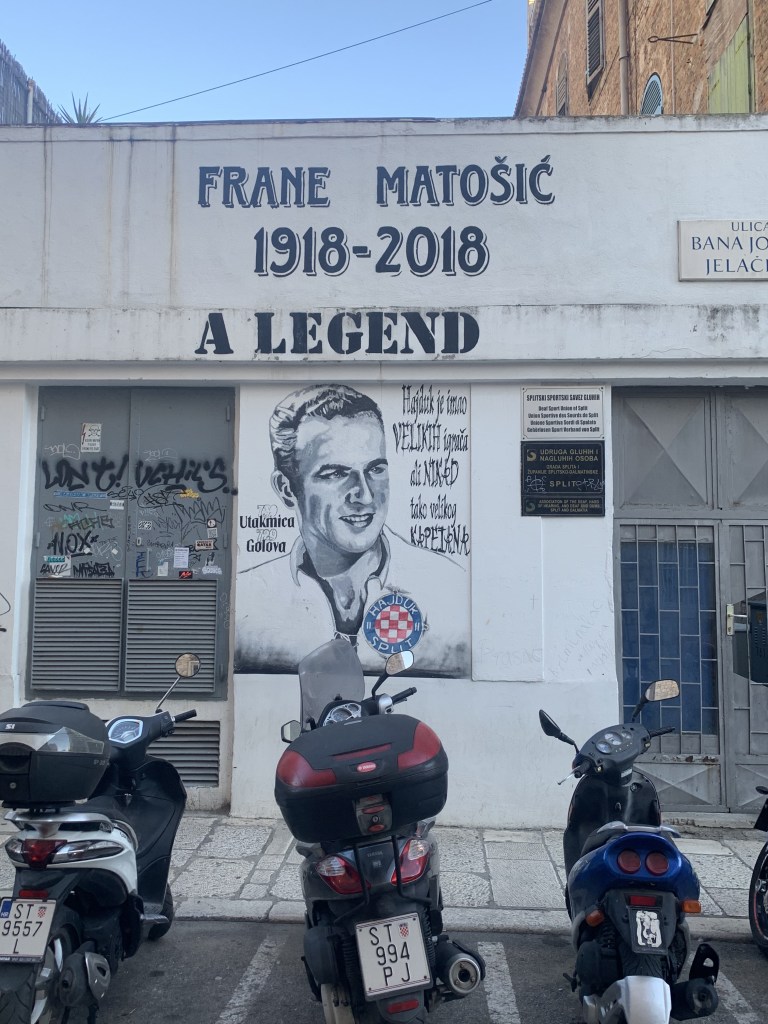
Last but not least – Frane Matošić was regarded as among the greatest players of Hajduk Split as having been the football team all-time leading goalscorer.
Closing remarks
Split is a city of contrasts—ancient and modern, polished and rough. It’s not just about pretty streets and cute cafés. The city reflects Croatia’s complicated history, from Roman emperors to socialism and capitalism. It’s a place that makes you think about the past and the present at the same time.
Hope you enjoyed reading! In my next article, I’ll share my experiences from Marjan Hill, Trogir, Krka, and some island-hopping adventures.

 Jackinna of all Trades